Agentic AI CRM Report • March 2026
Affiliate Disclosure: This site contains affiliate links for which Expert Product Lab may be compensated. Our technical evaluations are based on cloud infrastructure utility and autonomous Agentic AI ROI potential.
As we enter 2026, the emergence of the Agentic AI CRM marks the official end of the static database era. For over a decade, the enterprise world has operated under a comfortable, albeit expensive, delusion: that the more data we pour into our systems, the smarter our businesses become. We’ve treated platforms like Salesforce and HubSpot as “Systems of Record”—digital filing cabinets designed to store every interaction, but rarely to act upon them.
This report is written for CTOs, Heads of RevOps, and CRM leaders who are being asked to justify AI investments while their teams are still stuck manually updating pipelines. The goal is to show what a true Agentic AI CRM looks like in practice and how to audit your current stack against that standard.
to autonomous systems of action mirrors the developer revolution explored in
The Unicorn Project by Gene Kim — a Wall Street Journal bestseller
that maps exactly how enterprise teams break free from technical debt to build
agile, AI-ready architectures. (Amazon affiliate link)
The industry is now hitting a brutal inflection point. High-ticket organizations are realizing that a database, no matter how clean, is passive. It requires human manual labor to enter data, human intelligence to analyze it, and human initiative to execute. In an era of escalating cloud costs, this human dependency is no longer just an inefficiency—it is a systemic failure that only an Agentic AI CRM can solve.
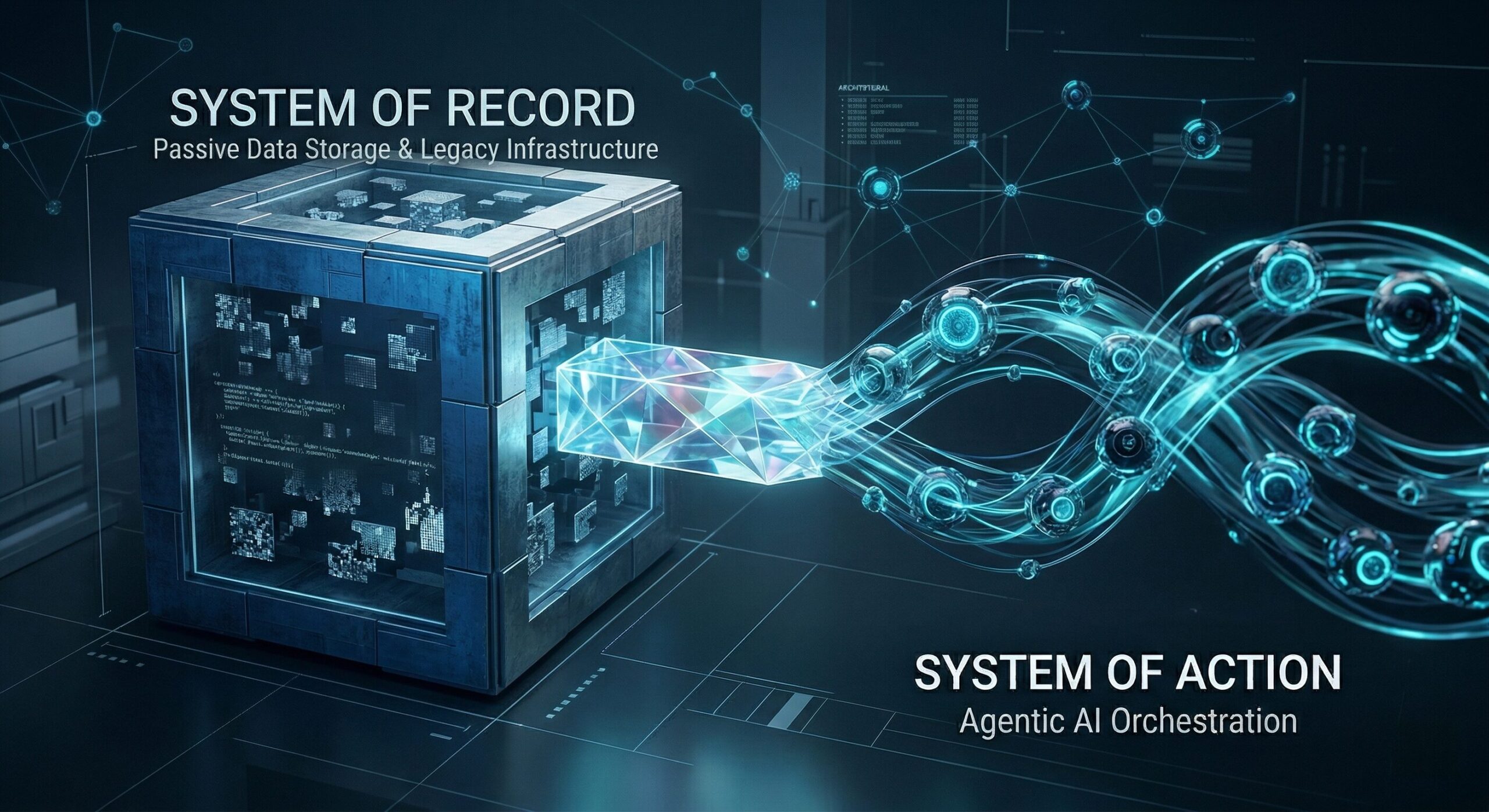
Structural Shift: Visualizing the transition from passive data storage to autonomous enterprise execution layers.
SOURCE: EXPERT PRODUCT LAB — ARCHITECTURE & SYSTEMS DIV. 2026
In this Technical Audit:
1. The Rise of the “System of Action”
The shift we are witnessing is the move toward Systems of Action. Unlike their predecessors, these are not passive repositories. They are active participants in the business ecosystem. Powered by Agentic AI, these systems don’t just wait for a salesperson to log a call; they orchestrate the entire customer journey autonomously.
An Agentic CRM doesn’t just “show” you a pipeline; it manages it. It identifies buy signals from technical audits and autonomously triggers personalized briefs, updating forecasts without a single human keystroke.
2. Bridging the Autonomy Gap
Most enterprises currently face what I call the Autonomy Gap, a challenge that only a well-structured Agentic AI CRM can bridge.
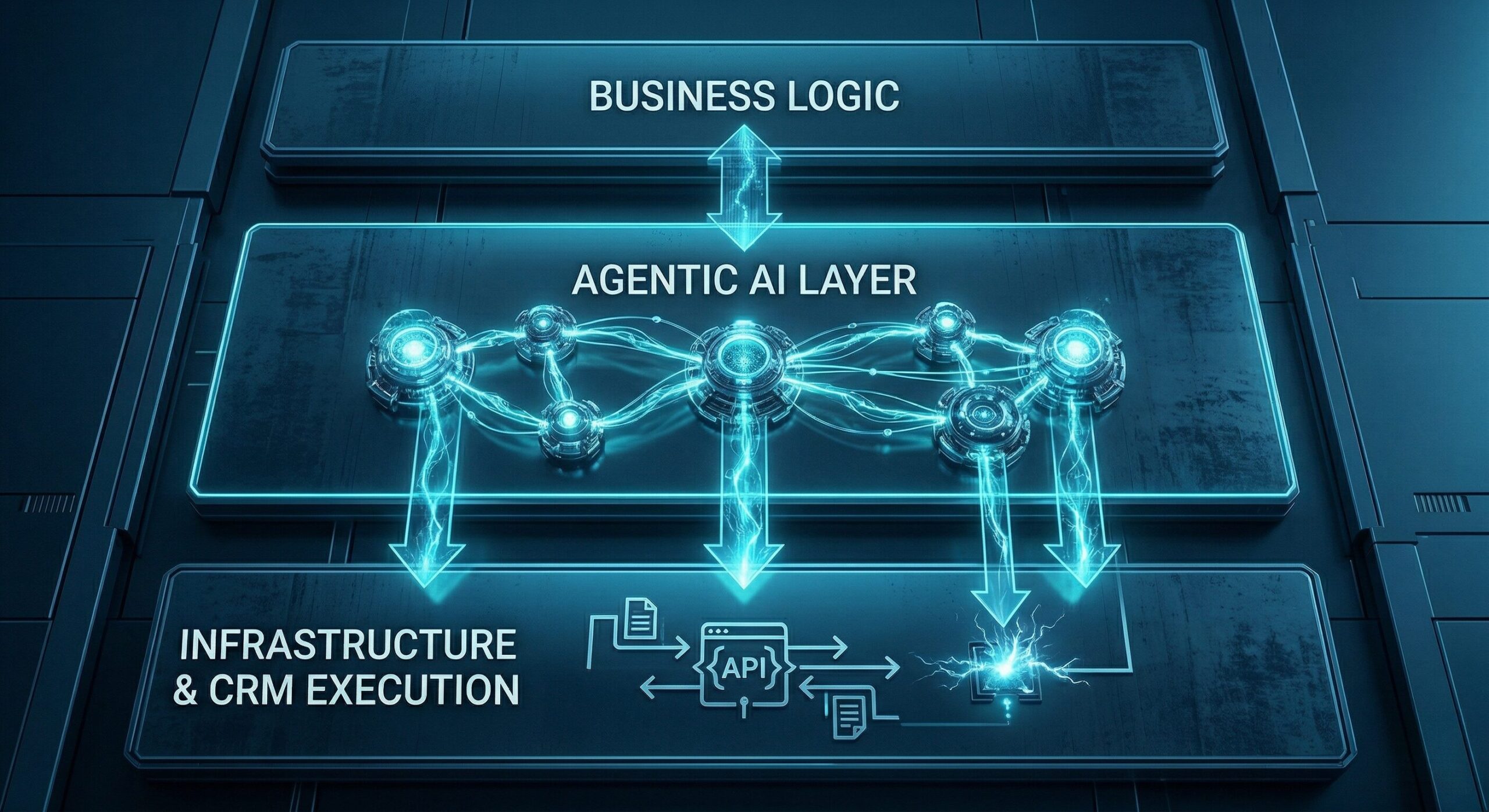
Agentic Framework: Deep-dive into the orchestration layer connecting business logic to automated CRM triggers.
SOURCE: EXPERT PRODUCT LAB — INTELLIGENCE UNIT 2026
Closing this gap requires a fundamental architectural shift:
- Orchestration over Summarization: Moving from AI that “reads” to AI that “does” (e.g., negotiating renewals based on usage data).
- Infrastructure-Aware Logic: Modern CRMs must integrate into the FinOps layer. This shift is the backbone of Agentic FinOps, protecting your margins autonomously.
- Automatic Execution: Data entry becomes a byproduct of action, not a manual chore for sales teams.
3. Salesforce Agentforce vs. HubSpot Breeze
The giants are already pivoting. Salesforce has bet the house on Agentforce, moving away from “helpers” to “coworkers.” HubSpot’s Breeze is focusing on making the mid-market “Agentic” by default.
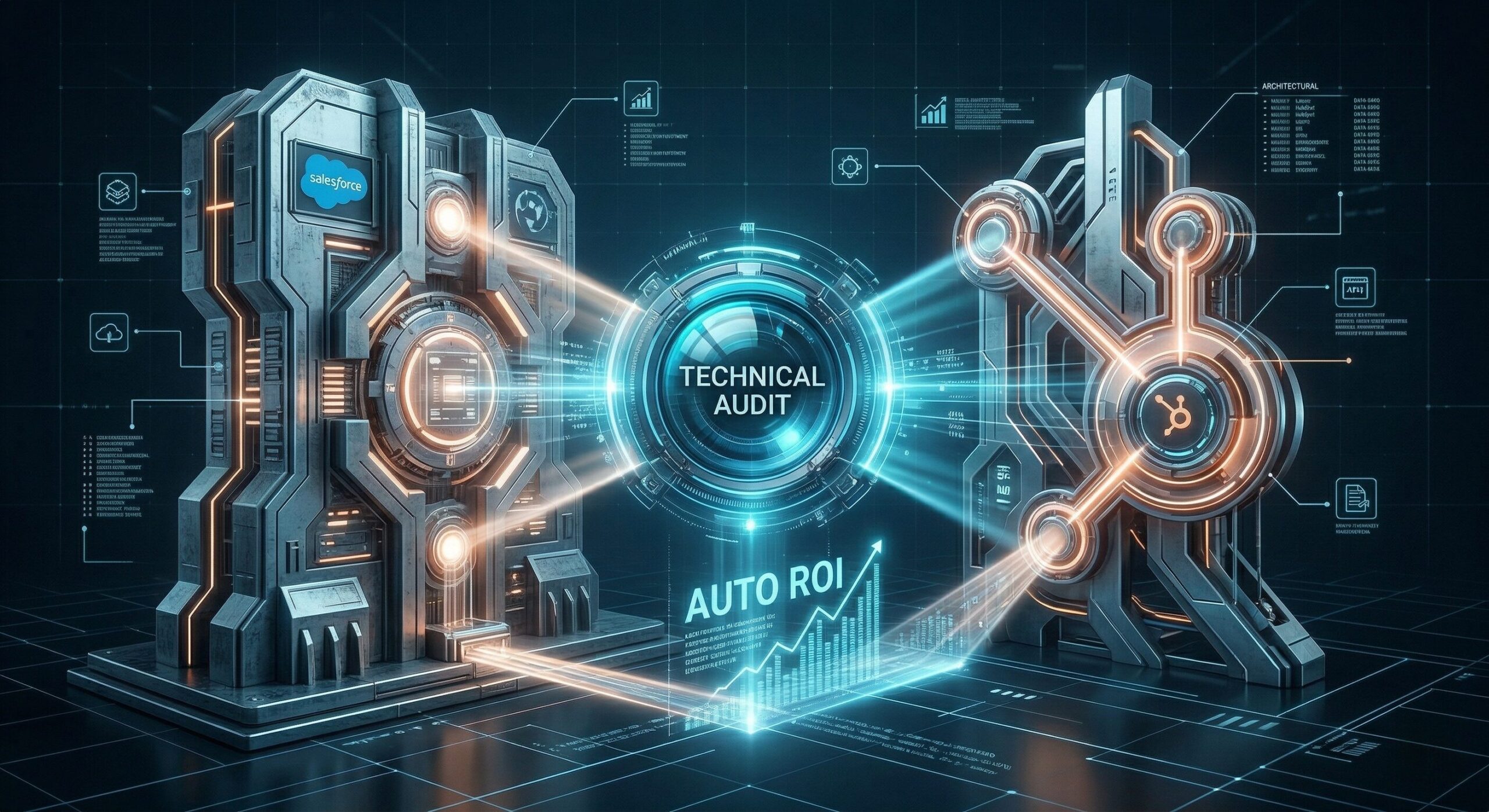
Ecosystem Audit: Identifying efficiency leaks in Salesforce and HubSpot stacks to drive automated ROI.
SOURCE: EXPERT PRODUCT LAB — B2B SAAS STRATEGY DIV. 2026
Buying the software is easy; the challenge is the Digital Ecosystem Audit. Without governance, you risk “Agentic Sprawl”—where bots execute conflicting logic, wasting API tokens and causing customer friction.
4. The Path Forward: Auditing for Autonomy
The winners of 2026 will be the leaders who stop asking “How do we store this data?” and start asking “How do we make this data act?”
The transition to a System of Action is not a software update; it is a structural revolution. As analyzed in our Smart Choices 2026 Report, it’s time to stop managing databases and start leading ecosystems.



Pingback: Agentic FinOps: 5 Powerful Ways AI Agents Automate Cloud ROI in 2026