ROI Guide for CTOs • 2026
Affiliate Disclosure: This site contains affiliate links for which Expert Product Lab may be compensated if you make a purchase. Our technical evaluations are based on infrastructure utility, scalability, and enterprise ROI potential.
ROI Guide for CTOs 2026: CRM, Managed Hosting, Shopify Plus & Enterprise Stack Strategy
In the current fiscal landscape, the role of a CTO has shifted from technology oversight to Financial Architecture. Every software acquisition must be justified by its ability to reduce operational drag or accelerate revenue.
At Expert Product Lab, we define Return on Investment not just as a percentage, but as the long-term technical debt avoided through intelligent selection.
Introduction: The Shift to “Boring” Infrastructure in 2026
In the digital economy of 2026, high-ticket affiliate marketing has undergone a profound transformation. For years, the industry was dominated by consumer gadgets, online courses, and impulse purchases. However, experienced digital strategists have gradually shifted their attention toward something far more powerful: enterprise software infrastructure.

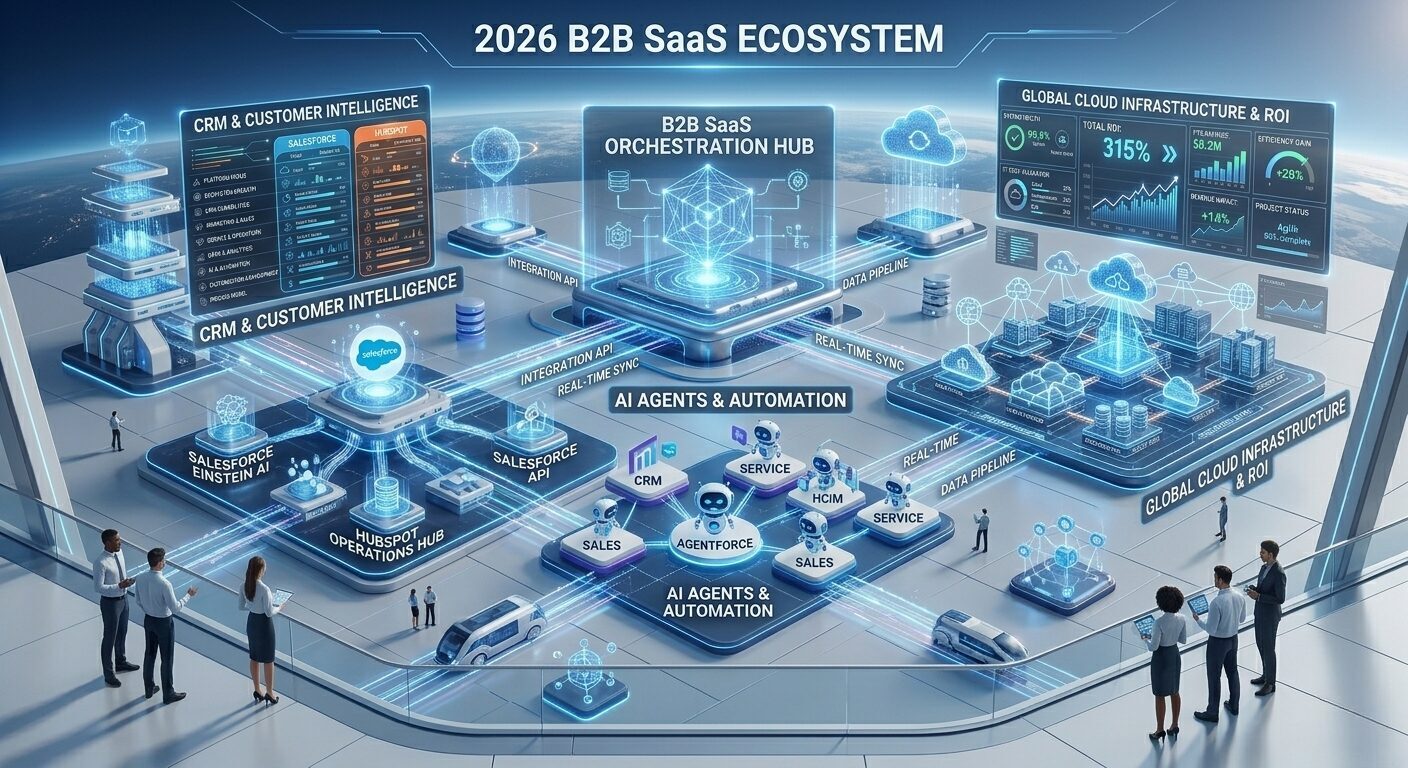
Strategic Map: 2026 Enterprise SaaS Stack Infrastructure ROI Framework and Technical Utility benchmarks.
SOURCE: EXPERT PRODUCT LAB ANALYSIS — TECHNICAL UTILITY DIVISION
Today, the tools that generate the most consistent revenue are not flashy consumer products. Instead, they are the invisible systems that power digital operations behind the scenes—CRM platforms, Agentic AI orchestration, cloud hosting infrastructure, marketing intelligence tools, and enterprise e-commerce engines.
These technologies are often described as “boring software,” but they are anything but insignificant. In reality, they are the operational backbone of modern businesses. Without reliable infrastructure, companies struggle with slow websites, fragmented data, inefficient workflows, and lost revenue opportunities. In 2026, the cost of technical debt is no longer just a line item; it is a direct threat to market share.
The Phoenix Project by Gene Kim, Kevin Behr, and George Spafford — still the definitive framework for enterprise CTOs navigating DevOps transformation in 2026. (Amazon affiliate link)
Enterprise decision makers increasingly recognize that technology is no longer just a support system. It is a strategic asset capable of driving revenue growth, improving operational efficiency, and enabling data-driven decision making. As a result, companies allocate significant budgets to software platforms that can solve critical infrastructure challenges.
This guide from Expert Product Lab focuses on the Middle-of-Funnel (MOFU) decision stage. Instead of providing superficial product reviews, we evaluate enterprise tools based on technical architecture, operational stickiness, long-term scalability, and measurable ROI.
For complementary evaluations, see our Best WordPress Hosting 2026 audit and our Best CRM for Small Business 2026 comparison to deepen the infrastructure and CRM layers of your stack.
Table of Contents:
1. CRM & Agentic AI: The 2026 ROI Standard
Customer Relationship Management (CRM) systems have evolved significantly over the past decade. In 2026, the most important innovation in the CRM ecosystem is the integration of Agentic AI—AI agents capable of executing autonomous workflows. These intelligent systems can analyze customer behavior, predict purchasing patterns, qualify leads automatically, and detect churn risks before they affect revenue. This isn’t just “chatbots”; it’s agents with the agency to update databases, trigger emails, and move deals through a pipeline without human intervention.
Try the Agentic AI ROI Calculator
If you want a lightweight way to test this thinking before building a full spreadsheet, our
Agentic AI ROI calculator
Turns team size, repetitive workload and tooling cost into automatable hours, monthly value and a clear ROI snapshot you can share with stakeholders.
Salesforce: The Standard for Agentforce Implementation
Salesforce has established itself as the “operating system” for the enterprise. Through its Agentforce architecture, Salesforce enables organizations to deploy intelligent automation systems across multiple departments. Sales pipelines, customer service operations, marketing automation, and analytics can all be integrated into a unified data environment.
- Advanced Customization: Organizations can design workflows tailored to complex internal processes using Apex and Flow.
- Enterprise Data Orchestration: Data Cloud allows for real-time synchronization of fragmented data across the entire organization.
- AI-Driven Automation: Intelligent agents assist with lead scoring, customer communication, and predictive analytics.
HubSpot: Achieving ROI through Ecosystem Stickiness
HubSpot approaches CRM from a different angle, prioritizing user experience (UX) and “time-to-value.” One of the platform’s greatest strengths is software stickiness. Once a company integrates its marketing automation, lead management, and support operations into HubSpot’s ecosystem, switching platforms becomes extremely difficult because the cost of retraining and data migration outweighs the benefits of moving.
- All-in-One Platform: Combines CRM, marketing automation, content management (CMS), and customer support.
- Simplified Integration: Reduces reliance on third-party middleware (like Zapier or Make), lowering the total cost of ownership (TCO).
- High Lifetime Value: Its tiered pricing model allows companies to grow from small startups to enterprise-level organizations within the same ecosystem.
Salesforce vs HubSpot: Enterprise Comparison Matrix
| Criteria | Salesforce | HubSpot |
|---|---|---|
| Core Philosophy | Highly Customizable Platform | Unified Ease-of-Use Ecosystem |
| Implementation Speed | 6–12 Months (Typical Enterprise) | 1–3 Months (Typical Enterprise) |
| AI Capabilities | Advanced Agentforce (Autonomous) | Breeze AI (Embedded Productivity) |
| Technical Debt Risk | High (if poorly architected) | Low (standardized workflows) |
| Operational Stickiness | Extremely High | Very High |
2. Managed Infrastructure: The Performance Backbone
In 2026, Core Web Vitals are no longer just a SEO metric; they are a direct proxy for brand reliability. Even a 100ms improvement in page loading speed can significantly impact user engagement, search engine rankings, and conversion rates in a world where attention spans are measured in milliseconds.
Infrastructure Architecture: Comparative analysis of isolated container environments vs. traditional DXP caching.
SOURCE: EXPERT PRODUCT LAB PERFORMANCE BENCHMARKS 2026
For this reason, companies are moving away from unmanaged VPS solutions and investing in Managed Hosting Platforms. These providers offer more than just storage; they provide optimized infrastructure, security monitoring, and automated scalability.
| Feature | Kinsta (Google Cloud) | WP Engine (DXP) |
|---|---|---|
| Infrastructure | Google Cloud Premium Tier | Multi-cloud (AWS/GCP) |
| Performance | Isolated LXD Containers | EverCache® Technology |
| Global Edge | 260+ Cloudflare PoPs | Global Cluster Access |
| Security | Enterprise DDoS + Firewall | Managed WAF + Visual Testing |
| CTO Value | Precision & Low Latency | Developer Ecosystem & Agility |
Kinsta: Google Cloud-Powered Precision
Kinsta is a premium managed hosting provider built entirely on Google Cloud Platform’s Premium Tier Network. Its LXD Container Isolation prevents “noisy neighbor” syndrome, and its 260+ Cloudflare PoPs accelerate content worldwide.
WP Engine: The Digital Experience Platform (DXP)
WP Engine has evolved from a simple hosting provider into a full Digital Experience Platform. Its proprietary EverCache technology handles millions of simultaneous requests, and its Smart Plugin Manager uses AI to automatically update plugins with visual regression testing.
3. Enterprise E-commerce: Navigating Global Scale with Shopify Plus
The e-commerce landscape of 2026 is omnichannel by default. Shopify Plus has emerged as the leading choice for brands transitioning from mid-market to enterprise, providing headless commerce capability through its Storefront API and reducing Maintenance Overhead.
- Shopify Audiences: An AI-powered tool that helps merchants identify high-intent buyers across social platforms, lowering Customer Acquisition Costs (CAC).
- B2B on Shopify: Allows brands to manage both D2C and B2B operations from a single platform, with custom price lists and net-payment terms.
- Unlimited Extensibility: Through Shopify Functions, brands can write custom logic directly into the Shopify backend without the performance hits of traditional apps.
see recommended e-commerce strategy books. (Amazon affiliate link)
4. Marketing Intelligence & Competitive Moats
In 2026, data is the new oil, but insight is the refined fuel. Tools like Semrush and Ahrefs are no longer just “SEO tools” — they are competitive intelligence suites allowing CTOs and CMOs to audit their digital footprint, monitor competitor pivot strategies, and identify “content gaps” for organic growth.
- Market Share Analysis: Visualizing your brand’s visibility compared to competitors in real-time.
- Volatility Tracking: Monitoring search algorithm updates to mitigate traffic loss risks.
- Content ROI: Analyzing which pieces of technical content are driving the highest conversion value.
5. The 2026 Enterprise WordPress Stack
WordPress continues to power over 40% of the internet. However, at the enterprise level, the “default” installation is a security risk. A strategic WordPress stack requires a layers-of-defense approach:
- SEO Governance: Using RankMath SEO to manage Schema markup and structured data, ensuring search engines understand the technical hierarchy of the site.
- Affiliate & Link Management: Pretty Links or ThirstyAffiliates for cloaking and tracking, providing clean URLs that maintain brand integrity.
- Headless Options: Utilizing WPGraphQL to separate the WordPress backend from a high-performance frontend (like Next.js), maximizing security and speed.
- Compliance Tools: Integrated cookie consent and GDPR/CCPA management systems that adapt based on the user’s geolocation.
explore WordPress and SEO reference books. (Amazon affiliate link)
6. The MOFU Decision Framework: A CTO’s Checklist
When evaluating infrastructure software in 2026, we recommend this four-pillar matrix:
- 1. Technical Utility: Does the software solve a core operational bottleneck, or is it just a “nice-to-have” feature?
- 2. Scalability & Elasticity: Can the platform handle a 10x increase in data or traffic without a complete architectural overhaul?
- 3. Operational Stickiness: How much value is created through integration? Does it talk to your CRM, ERP, and Data Warehouse?
- 4. Security & Compliance: Does the provider offer SOC2 Type II, GDPR, and HIPAA compliance where necessary?
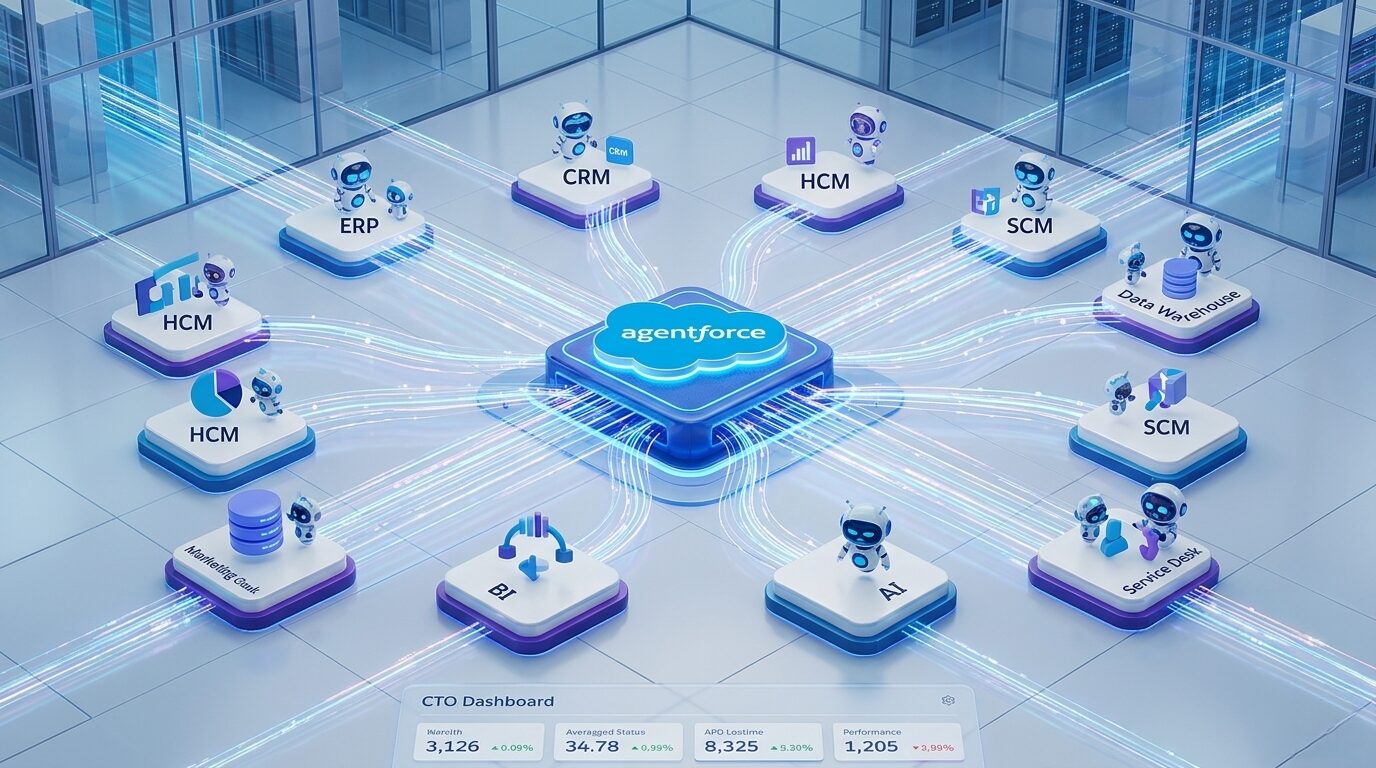
Infrastructure Architecture: Comparative analysis of isolated container environments vs. traditional DXP caching.
SOURCE: EXPERT PRODUCT LAB PERFORMANCE BENCHMARKS 2026 — TECHNICAL UTILITY DIVISION
Conclusion: Transitioning to the Consultant Mindset
The era of simple product promotion is disappearing. In 2026, the market is too sophisticated for generic “top 10” lists. At Expert Product Lab, our mission is to analyze enterprise platforms through a technical lens. We focus on the “boring” details—API documentation, server latency, data redundancy, and implementation curves—because those are the factors that determine long-term success.
By choosing the right infrastructure today, businesses can build a stable foundation for long-term digital growth, ensuring that their technical stack is a revenue generator rather than a cost center. To see more technical evaluations, visit our Smart Choices section.
This ROI Guide for CTOs is updated regularly to reflect the 2026 software landscape.



Pingback: Smart Choices: Navigating the B2B SaaS Landscape for Strategic Advantage in 2026 - expertproductlab.com
Pingback: Smart Choices: The 2026 B2B SaaS Landscape for CTOs
Pingback: Kinsta vs WP Engine 2026: The Enterprise WordPress Hosting Audit - expertproductlab.com
Pingback: Best Mini PC Home Lab 2026: Enterprise Cloud Practice Audit
Pingback: Best CRM for Small Business 2026: Buyer's Audit
Pingback: Best WordPress Hosting 2026 — Ranked by Real Speed Tests
Pingback: Beyond CRM: Autonomous Sales Stacks in 2026
Pingback: Research Methodology 2026 - expertproductlab.com
Pingback: Agentic AI CRM for Small Business: What Actually Matters in 2026
Pingback: Enterprise AI Budgeting Framework: Tooling, Implementation & Sustenance (2026)
Pingback: Enterprise AI Budgeting 2026: 4 Traps That Destroy ROI (And How to Avoid Them)