
Research Methodology • 2026
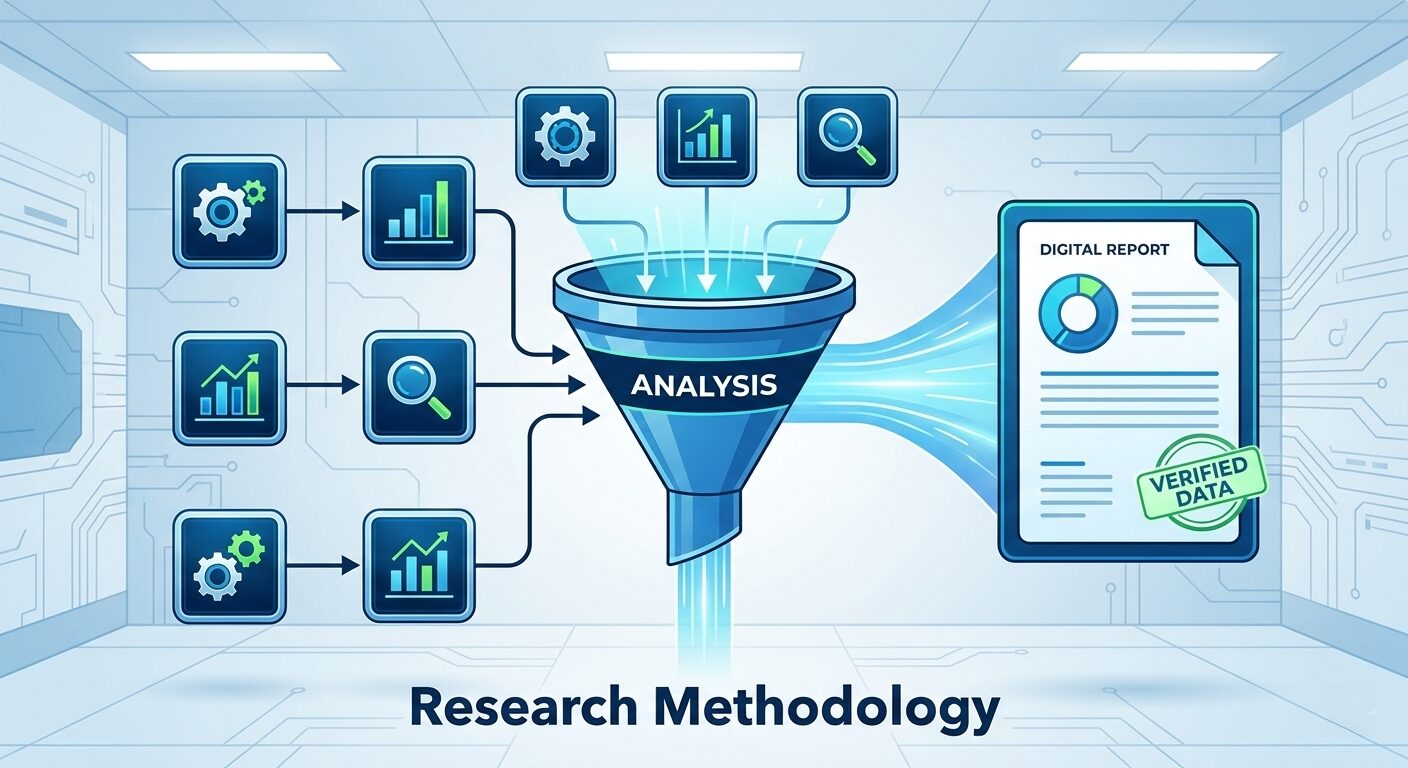
Strategic Research Methodology: A proprietary four-phase iterative framework designed for objective B2B SaaS evaluation and architectural auditing.
Our methodology utilizes a specialized Decision Intelligence Matrix to cross-reference data integrity, technical utility, and vendor scalability benchmarks. The process integrates real-world infrastructure performance audits with comprehensive TCO (Total Cost of Ownership) analysis to generate unbiased market intelligence.
© 2026 Expert Product Lab — Infrastructure Strategy Division.
Methodology Highlights: Technical SaaS Auditing
- Primary Audits: Hands-on testing of API resilience, rate-limiting, and multi-tenant scalability.
- Interoperability Focus: Evaluating the “System of Agency” readiness for 2026 AI-driven ecosystems.
- Integrity: 100% vendor-agnostic research supported by strategic infrastructure partnerships.
At Expert Product Lab, our research methodology is engineered to solve a critical 2026 enterprise challenge: the widening gap between marketing promises and architectural reality. As enterprise software transitions from traditional databases toward Autonomous Agency, standard “feature-list” comparisons have become obsolete for CTOs and Infrastructure Architects.
In simple terms, our research methodology is a repeatable way to stress-test B2B SaaS platforms under real conditions: we connect to APIs, map data flows, and model long‑term technical debt so decision‑makers can see how a tool will behave inside their actual infrastructure, not just on a pricing page.
1. The Evidence-Based Technical Audit Pillar
Our research methodology begins with Primary Technical Audits. Unlike standard review sites, we do not rely on vendor-supplied whitepapers or marketing documentation. Our analysts engage directly with the platform’s API and infrastructure to measure real-world reliability and documentation accuracy.
In 2026, the global benchmark for success is Agentic Fluidity. We analyze how effectively a platform’s Metadata Layer feeds Large Language Models (LLMs) without causing data hallucinations or excessive processing latency. This phase follows strict security governance standards to ensure all tested environments meet enterprise-grade compliance.
2. Measuring Data Liquidity and Latency ROI
A core component of our SaaS research methodology is the Data Liquidity Metric. This measures the velocity at which unstructured data can be transformed into actionable insights by autonomous AI agents. We evaluate the “friction” present in data egress and ingress points.
High-friction environments that require extensive ETL (Extract, Transform, Load) processes are heavily penalized in our scoring system. Our goal is to provide a clear view of the Infrastructure ROI, helping stakeholders understand if a tool will accelerate or hinder their digital transformation roadmap.
applied directly to enterprise CRM, hosting, Shopify Plus and marketing intelligence,
read our
ROI Guide for CTOs 2026.
It turns these audit pillars into a concrete decision framework for technical leaders.
3. The 3-Year Technical Debt Forecast
Every technical audit we perform includes a Technical Debt Projection. According to recent Gartner research on Enterprise Architecture, hidden debt is the #1 cause of project failure. We analyze the long-term cost of custom codebases versus adopting native, unified schemas.
Our methodology identifies “Silent ROI Killers”—architectural choices that seem cost-effective today but create massive integration friction during the scaling phase. By forecasting these costs over
a 36-month horizon, we provide a more accurate TCO than typical software comparisons.
Once your research framework is in place, the next step is turning those
data-backed insights into a realistic AI budget. For a detailed breakdown
of licensing, implementation engineering, and maintenance costs, see
Enterprise AI Budgeting in 2026: 4 Traps That Destroy ROI (And How to Avoid Them)
.
4. Comparison Matrix: How We Score SaaS Ecosystems
Our scoring follows a weighted average across four critical dimensions of the research methodology framework:
| Evaluation Criterion | Method of Verification | Impact on Infrastructure ROI |
|---|---|---|
| API Resilience | Stress Tests & Latency Audits | High — Critical for Scalability |
| Schema Unity | Data Flow Mapping | High — Agentic Accuracy |
| Interoperability | Cross-Platform Sync Tests | Medium — Ecosystem Agility |
| Security Governance | Zero-Trust Compliance Audit | Critical — Risk Mitigation |
5. Strategic Partnership & Editorial Independence
Maintaining the integrity of our research methodology requires a strict separation between our technical lab and any commercial partnerships. While we collaborate with infrastructure providers to access beta environments, our final technical scores are generated through proprietary scripts immune to external influence.
Ecosystem Integration
We monitor API shifts and foundation model updates daily to ensure our audit benchmarks remain future-proof.
Editorial Sovereignty
Expert Product Lab does not accept paid placements. All scores are purely data-driven.


Pingback: Salesforce vs HubSpot 2026: The Agentic CRM Architecture Audit