AI & Productivity Tools • 2026
Affiliate Disclosure: This site contains affiliate links for which Expert Product Lab may be compensated if you make a purchase. Our technical evaluations are based on real-world usability, ROI potential, and small business applicability.
Best AI Workflow Stack for Small Business 2026
The best AI workflow stack for small business 2026 helps teams automate repetitive work, improve response times, and keep daily operations organized. This guide is built around practical tools that save time and create measurable ROI.
Most small businesses don’t need more AI tools. They need the right stack working together to remove bottlenecks in writing, automation, sales, meetings, and support. At Expert Product Lab, we built this guide around one question: which AI workflow stack actually saves time, reduces manual work, and creates measurable ROI in 2026?
The best AI workflow stack for small business 2026 is not the one with the most features. It is the one that removes the most painful repetitive work with the least setup friction.
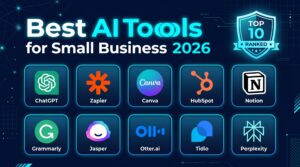
If you also want the broader tool-by-tool breakdown, see our Best AI Tools for Small Business 2026 ranking and the Best CRM for Small Business 2026 audit for the sales layer that completes the stack.

Workflow Stack Map: A practical AI system for writing, automation, CRM, meetings, and support.
SOURCE: EXPERT PRODUCT LAB ANALYSIS — AI & PRODUCTIVITY INTELLIGENCE DIVISION
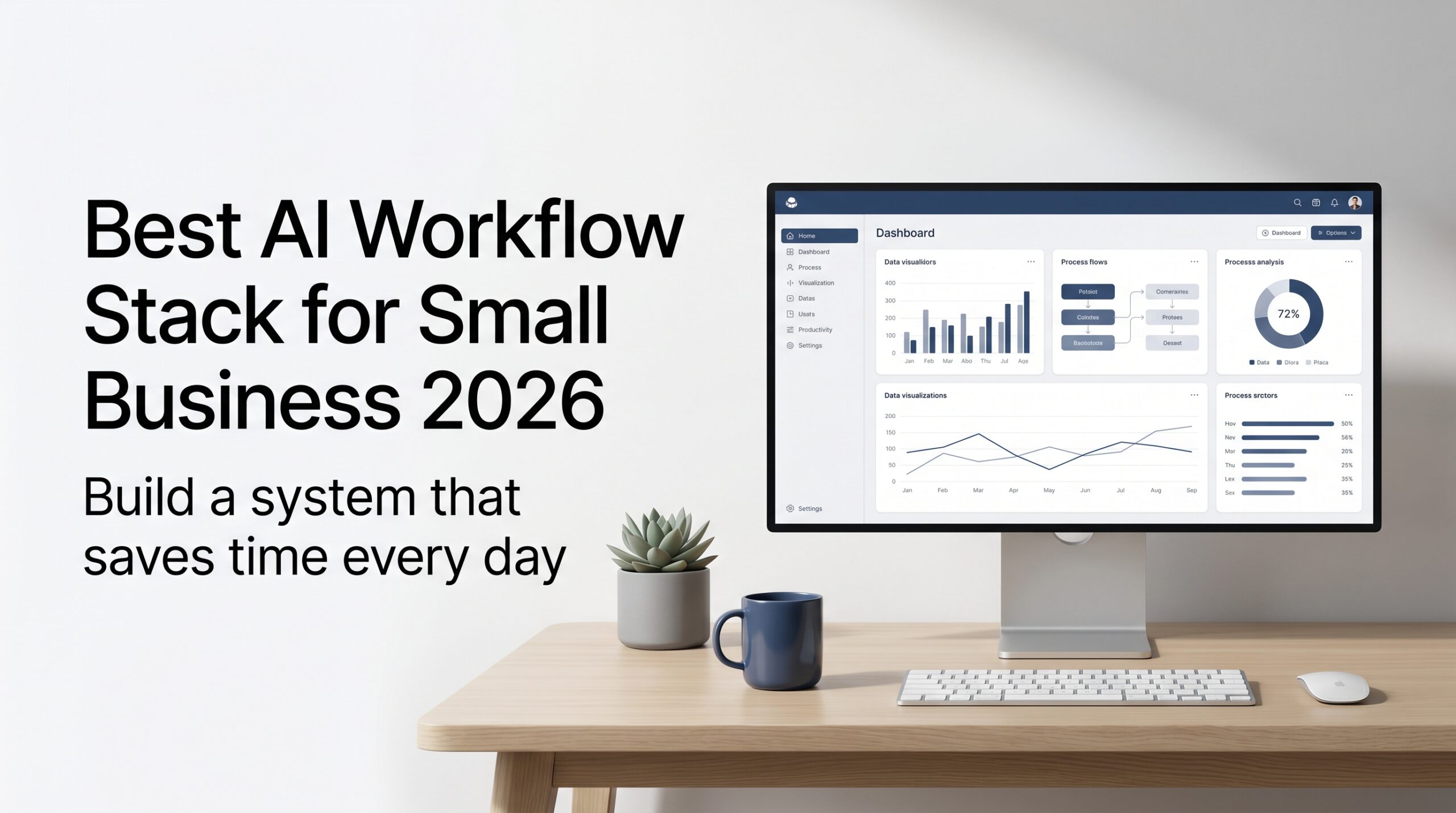
Productivity Setup: A monitor-focused banner for workflow and focus.
SOURCE: EXPERT PRODUCT LAB VISUAL DESIGN UNIT
Table of Contents:
1. Why workflow stacks beat single tools
AI tools are useful, but a standalone tool rarely removes a whole business bottleneck. A workflow stack does. When ChatGPT drafts the content, Zapier moves the data, HubSpot stores the lead, Otter.ai captures the meeting, and Tidio handles support, the business starts acting like a system instead of a pile of disconnected apps.
That is why the best AI workflow stack for small business 2026 should be simple, repeatable, and easy to maintain. If a tool doesn’t save time every week, it doesn’t belong in the stack.
2. The core AI workflow stack
This is the practical foundation we recommend for most small businesses in 2026. Start with the core five, then add extras only when a specific bottleneck appears.
ChatGPT — writing and communication
Use ChatGPT for emails, blog drafts, customer replies, outlines, summaries, and internal brainstorming. It is the easiest way to speed up daily writing without changing your whole process.
- Best for: Email drafts, blog ideas, product descriptions, customer communication.
- Why it stays in the stack: It solves the most universal bottleneck — writing time.
Zapier — automation and glue
Zapier connects your apps and removes repetitive manual steps. It is the glue layer that turns isolated tools into a workflow.
- Best for: Lead capture, email routing, CRM updates, notifications, task creation.
- Why it stays in the stack: It eliminates copy-paste work across apps.
HubSpot AI — CRM and sales
HubSpot AI gives you CRM, lead tracking, email support, and basic automation in one place. For small businesses, it is often the best home for leads and sales conversations.
- Best for: Sales pipelines, follow-up emails, deal tracking, customer records.
- Why it stays in the stack: It prevents lead loss and keeps your data organized.
Otter.ai — meetings and action items
Otter.ai records, transcribes, and summarizes meetings so nothing gets lost after the call. It is especially useful for teams that meet often but struggle to turn meetings into action.
- Best for: Meeting notes, summaries, action items, searchable transcripts.
- Why it stays in the stack: It saves time and reduces follow-up mistakes.
Tidio — customer support
Tidio helps small businesses answer common support questions automatically, 24/7. That makes it ideal for e-commerce and service businesses with repetitive customer messages.
- Best for: FAQ handling, support chat, order questions, after-hours replies.
- Why it stays in the stack: It reduces the need for constant manual support response.
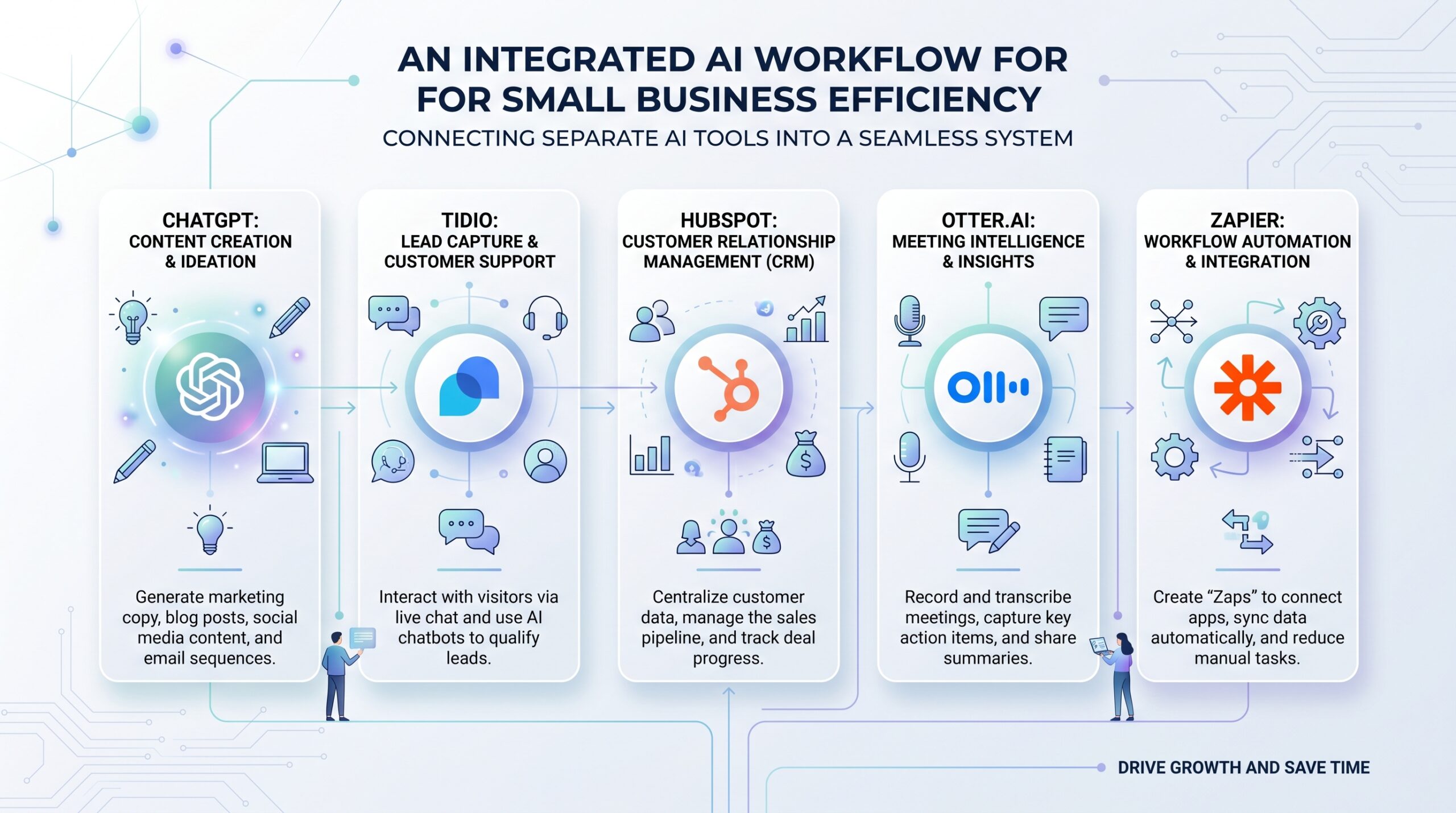
Workflow Diagram: A visual map of the AI stack in action.
SOURCE: EXPERT PRODUCT LAB VISUAL DESIGN UNIT
3. Best stack combinations by business type
Different businesses need different combinations. A solo creator does not need the same stack as a small e-commerce team.
| Business type | Recommended stack | Main benefit |
|---|---|---|
| Solopreneur | ChatGPT + Zapier + Canva AI | Fast content creation and lightweight automation |
| Small team | ChatGPT + Zapier + HubSpot AI + Otter.ai | Sales, meetings, and content in one system |
| E-commerce | ChatGPT + Zapier + HubSpot AI + Tidio + Canva AI | Productivity, customer support, and conversion |
| Service business | ChatGPT + HubSpot AI + Otter.ai + Grammarly | Better communication and cleaner follow-up |
4. Recommended tools by function
If you want to build the stack in the most efficient order, start with the tool that removes your biggest bottleneck first. Then add the next one only when the first is already paying for itself.
The best AI workflow stack for small business 2026 often starts with writing and automation, then expands into CRM, meetings, and support as the team grows.
- Writing: ChatGPT, Grammarly.
- Automation: Zapier.
- Sales/CRM: HubSpot AI.
- Meetings: Otter.ai.
- Support: Tidio.
- Design: Canva AI.
- Research: Perplexity.
- Internal docs: Notion AI.
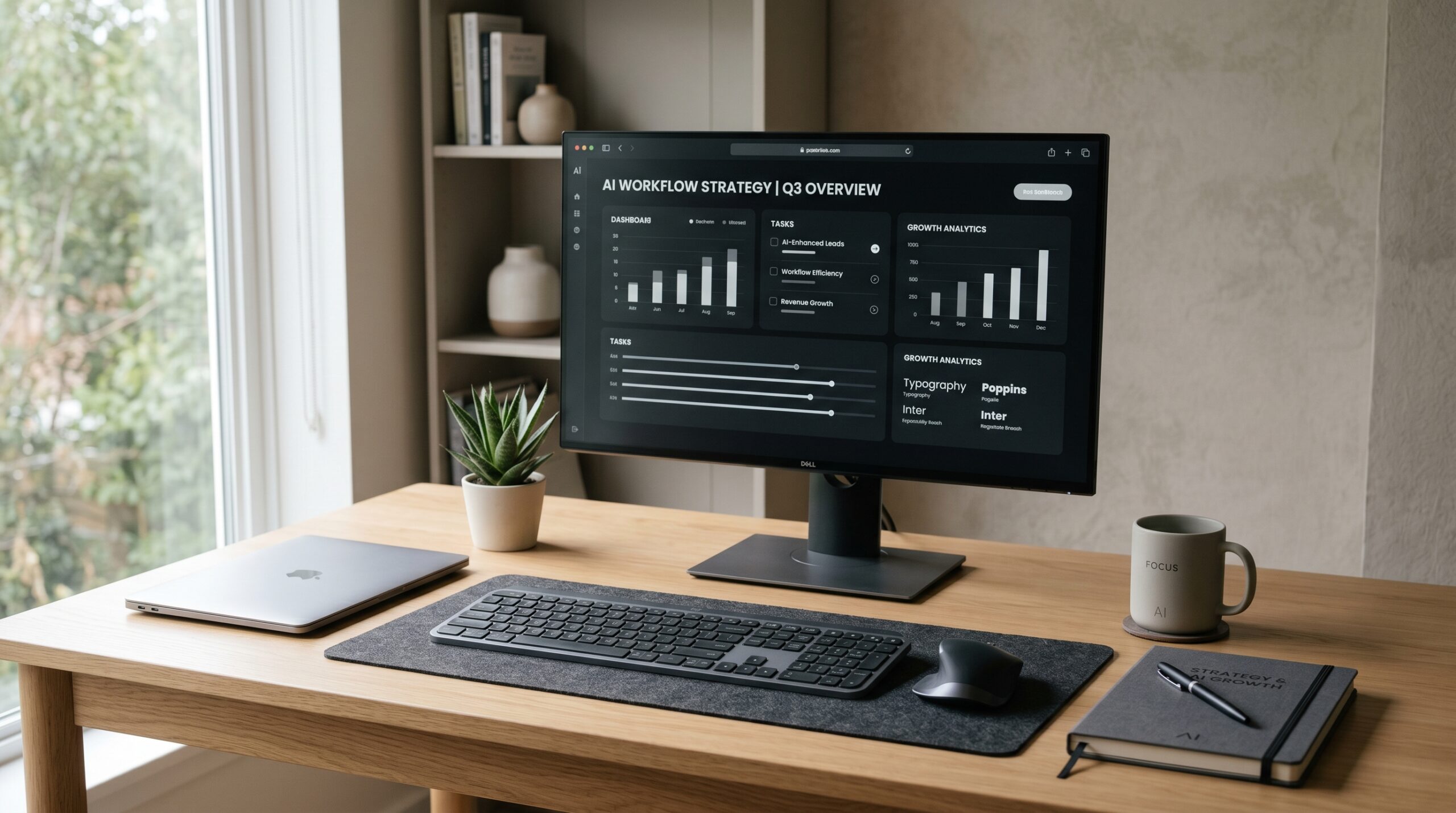
Minimal Section: Clean visual support for the editorial layout.
SOURCE: EXPERT PRODUCT LAB VISUAL DESIGN UNIT
5. Amazon products that support the stack
Since this article is about workflow performance, a few physical products fit naturally without breaking the editorial flow. The best Amazon products here are not random gadgets — they are setup tools that improve focus, comfort, and execution.

Amazon Product Banner: Productivity hardware that supports the workflow stack.
SOURCE: EXPERT PRODUCT LAB MONETIZATION VISUALS
Explore 4K monitors on Amazon.
Explore mechanical keyboards on Amazon.
6. Frequently Asked Questions
For most businesses, the best starting stack is ChatGPT + Zapier + HubSpot AI. That combination covers content, automation, and sales — the three areas that usually create the biggest time loss.
No. The best workflow stack is lean. Start with the tools that remove your biggest bottleneck, then add only when the business is ready for the next layer.
For most small businesses, yes. Zapier is the easiest way to automate common tasks without technical setup. If your workflows become very complex later, you can evaluate more advanced tools.
Buy the tool that removes your biggest daily bottleneck. For many businesses that is ChatGPT. If your issue is manual task movement between apps, start with Zapier. If support is your pain point, start with Tidio.
Yes. In fact, solopreneurs often benefit the most because the stack replaces work that would normally require a part-time assistant, a junior marketer, or an operations helper.


Pingback: The 2026 Founder Stack: Hosting, Home Office, and AI Workflows