Enterprise AI Budgeting Report • July 2026
Editorial Note: This article is designed for enterprise teams evaluating how to allocate AI budget with stronger ROI discipline, operational readiness, and governance alignment in 2026.
AI Budget Prioritization 2026: What to Fund First in Enterprise Teams
In 2026, enterprise AI planning is no longer about whether to invest. The real question is where the first dollar should go. For most leadership teams, the challenge is not access to tools but sequencing. When funding is allocated in the wrong order, organizations often end up with disconnected pilots, weak adoption, and unclear returns. When it is allocated correctly, AI becomes a measurable business lever rather than a loose innovation line item.
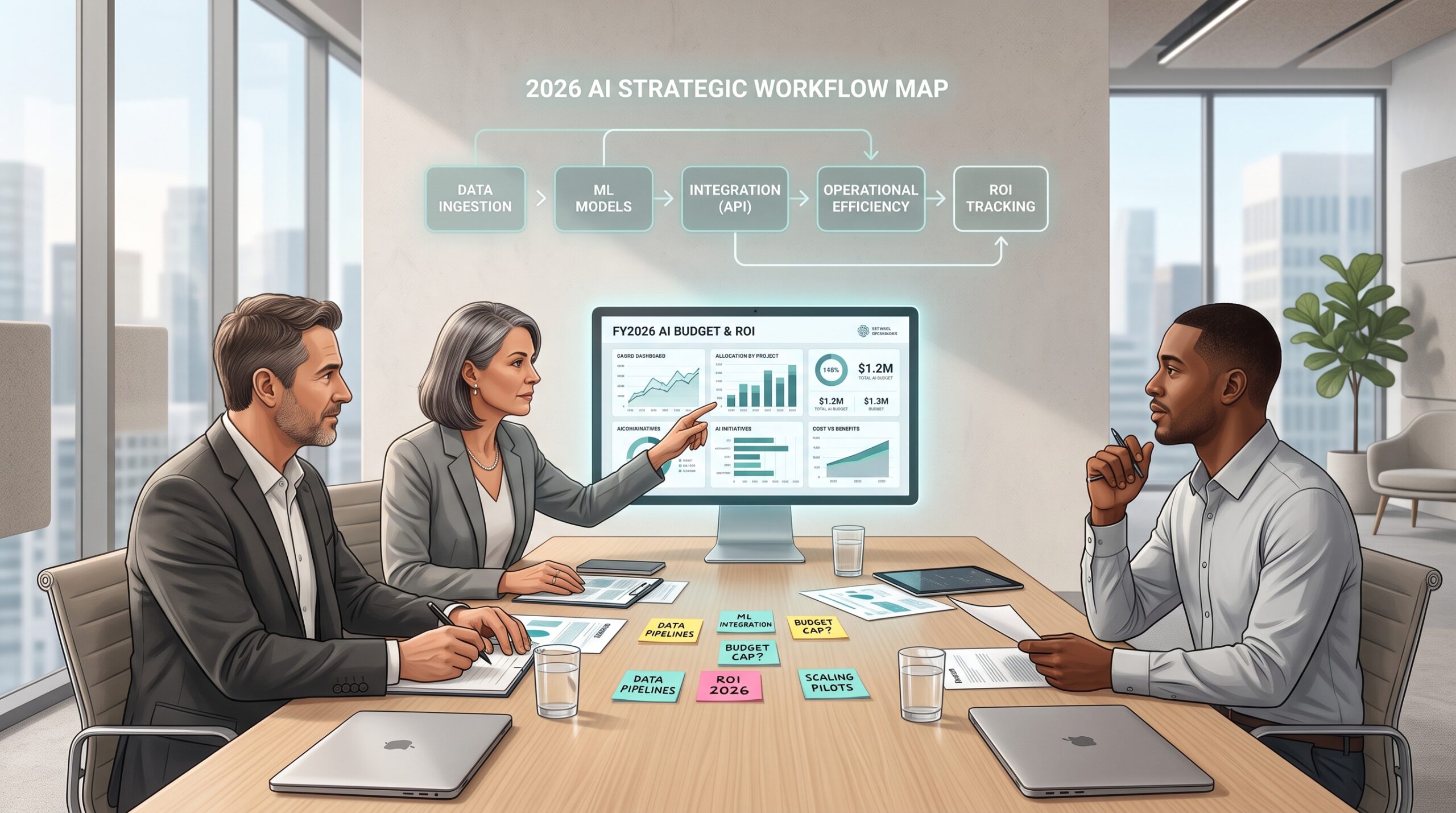
Executive Allocation View: Enterprise leaders aligning AI spend with ROI, operational readiness, and scale priorities.
SOURCE: EXPERT PRODUCT LAB — ENTERPRISE AI ECONOMICS 2026
Test your AI budget scenario
Want to see how tools, implementation, training, and ongoing support affect your annual AI spend? Use our
AI Budget Scenario Planner to compare funding paths before you commit budget.
At Expert Product Lab, we define AI budget prioritization as the discipline of funding use cases in the order that produces the fastest visible value, while building the minimum viable foundation required for scale. This article extends the logic behind our enterprise budgeting coverage by focusing on one practical issue: what enterprise teams should fund first when the AI roadmap is larger than the available budget.
In this article:
1. Why AI Budget Prioritization Matters Now
Most enterprises do not suffer from a lack of AI ideas. They suffer from too many possible investments competing for the same budget. Customer support automation, internal assistants, data platforms, compliance layers, model access, workflow orchestration, and workforce training can all appear urgent at the same time. Without a funding hierarchy, spending spreads too early across too many fronts.
That is why prioritization has become a strategic capability. The strongest AI budgets in 2026 are not the ones that simply spend more. They are the ones that place early capital into initiatives with clear business value, visible ownership, and realistic adoption paths.
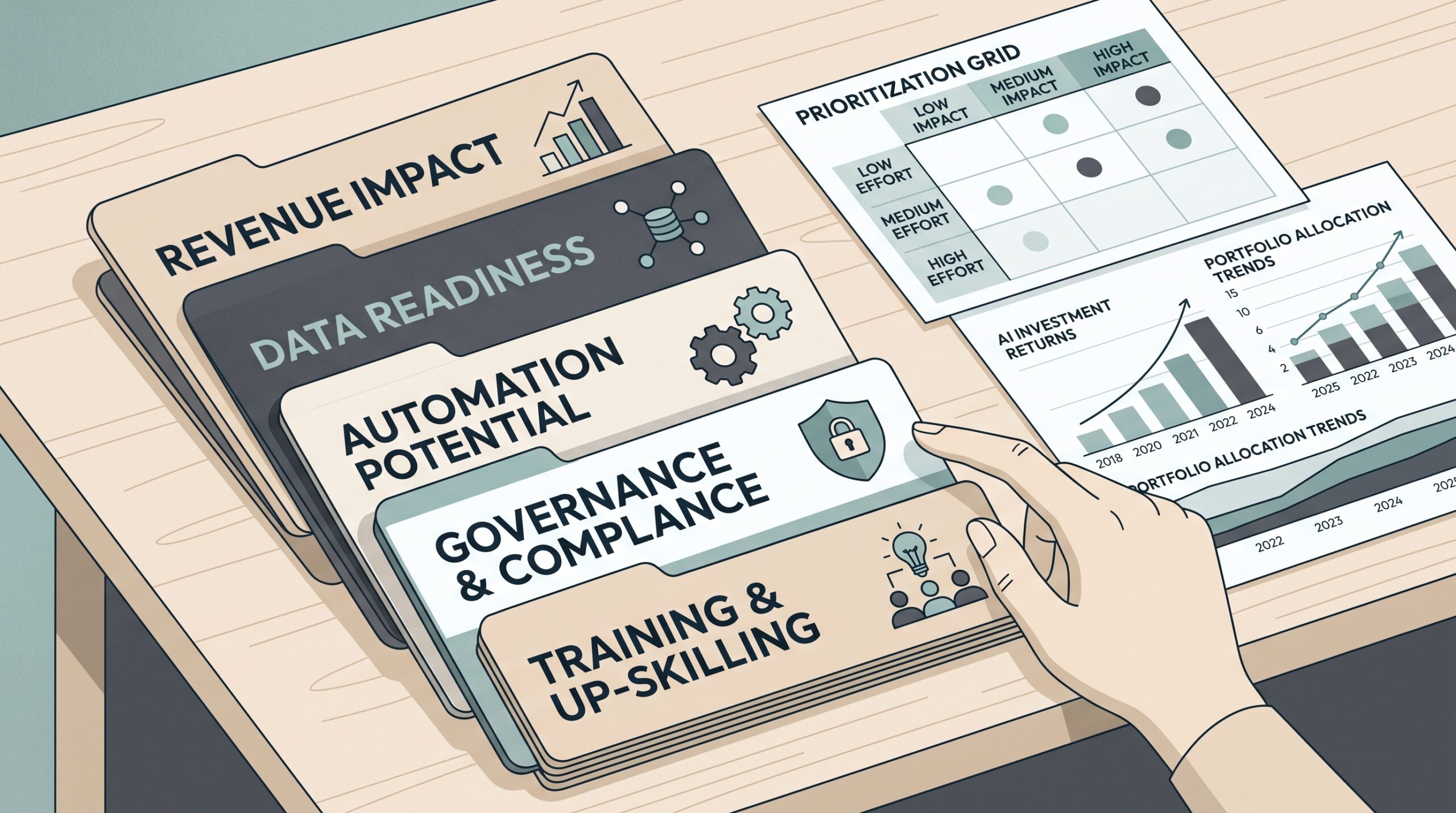
Allocation Framework: AI budget decisions work best when funding is sequenced by business value, readiness, and long-term scale.
SOURCE: EXPERT PRODUCT LAB — ENTERPRISE AI ECONOMICS 2026
2. A Portfolio Logic for Enterprise AI Spend
The most useful way to think about AI budget allocation is to treat it as portfolio management. Some investments should create short-term wins. Others should strengthen the operational base. A smaller set should prepare the organization for broader scale later. The mistake is to fund all three categories at the same intensity on day one.
A practical evaluation framework asks five questions before budget is approved:
- Does this initiative increase revenue, reduce cost, or reduce risk?
- How quickly will value become measurable?
- How much implementation effort is required?
- What compliance, security, or governance exposure does it create?
- Can it scale beyond a single team or workflow?
If the answer to most of those questions is still unclear, the initiative may deserve exploration, but not aggressive funding.
3. What to Fund First
The first wave of enterprise AI spending should focus on use cases with fast, visible business value. These are usually initiatives where the process already exists, the data is reasonably accessible, and the output can be measured with normal operating metrics.
Strong first-funding candidates:
- Customer support automation where ticket deflection, response time, and resolution quality can be tracked.
- Sales enablement where AI improves proposal creation, lead qualification, or CRM productivity.
- Internal knowledge assistants that reduce search time across policies, documentation, and operations.
- Workflow automation in finance, operations, or procurement where repetitive steps already exist.
- Cost-control applications such as FinOps analysis, vendor rationalization, or internal support reduction.
These categories tend to outperform more abstract initiatives because they already sit inside defined workflows. They also have one of the most important characteristics in enterprise AI: a clear owner. A funded use case without operational ownership is often just a delayed budget write-off.
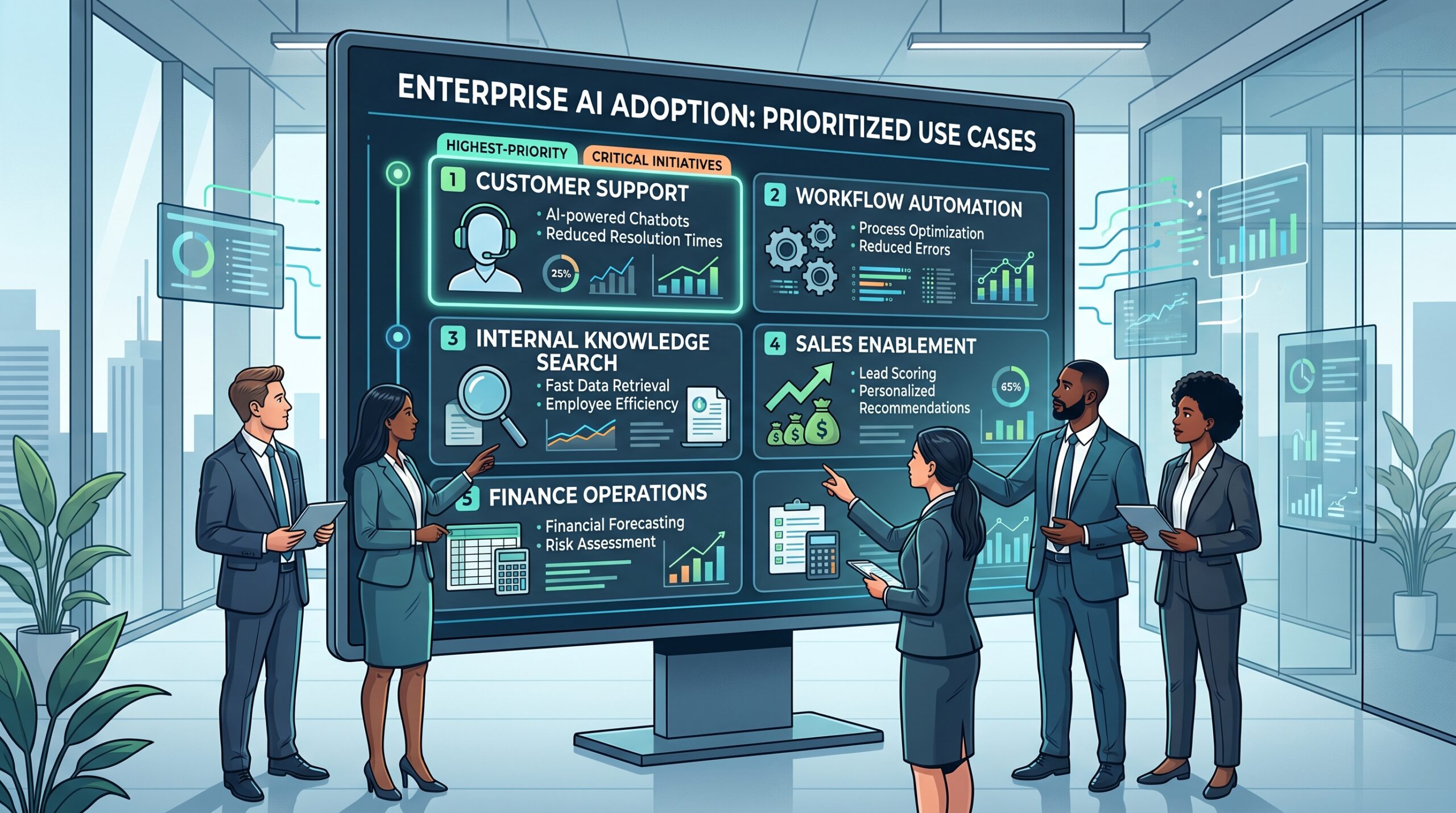
Priority Ranking: Early AI funding performs best when tied to workflows with measurable outcomes and clear ownership.
SOURCE: EXPERT PRODUCT LAB — ENTERPRISE AI ECONOMICS 2026
4. What Should Come After the First Wins
Once the first use cases are proving value, the next funding layer should support scale. This includes data access, workflow integration, governance controls, security policies, and measurement infrastructure. These investments matter because a successful pilot often fails at the expansion stage if the surrounding operating system is weak.
That does not mean infrastructure should be ignored at the start. It means it should be funded in proportion to proven demand. In most cases, enterprises should avoid building a heavyweight AI foundation before they have evidence that the first use cases deserve broader rollout.
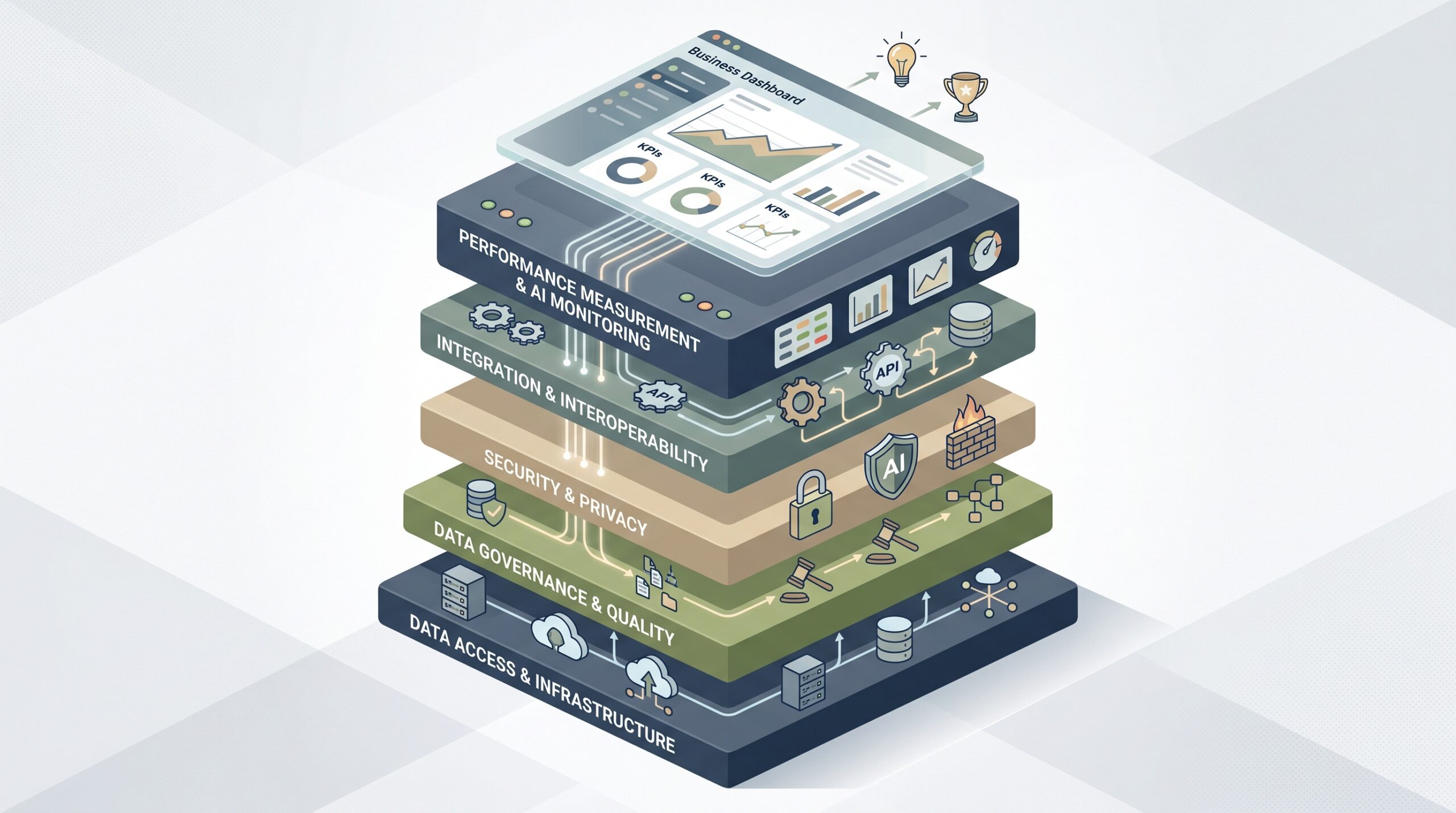
Foundation Layer: Governance, integration, and data maturity turn early AI wins into scalable operating capability.
SOURCE: EXPERT PRODUCT LAB — ENTERPRISE AI ECONOMICS 2026
5. What to Delay
Not every AI initiative deserves immediate budget allocation. Some ideas are strategically interesting but financially premature. This is especially true when the organization still lacks data maturity, process ownership, or clear success metrics.
Initiatives that usually belong in a later wave:
- Highly experimental concepts with no business owner.
- Tools that do not connect to a real workflow.
- Large transformation programs without a first measurable use case.
- Automations that depend on fragmented or unreliable data.
- Platform purchases justified by trend pressure rather than operating need.
These initiatives may still matter later, but early-stage enterprise AI budgets work best when they are tied to visible outcomes rather than conceptual ambition.
6. A Practical Prioritization Matrix
A simple ranking matrix helps leadership teams compare very different AI proposals without turning prioritization into opinion politics. The five most useful criteria are business impact, implementation effort, time to value, operational risk, and scalability.
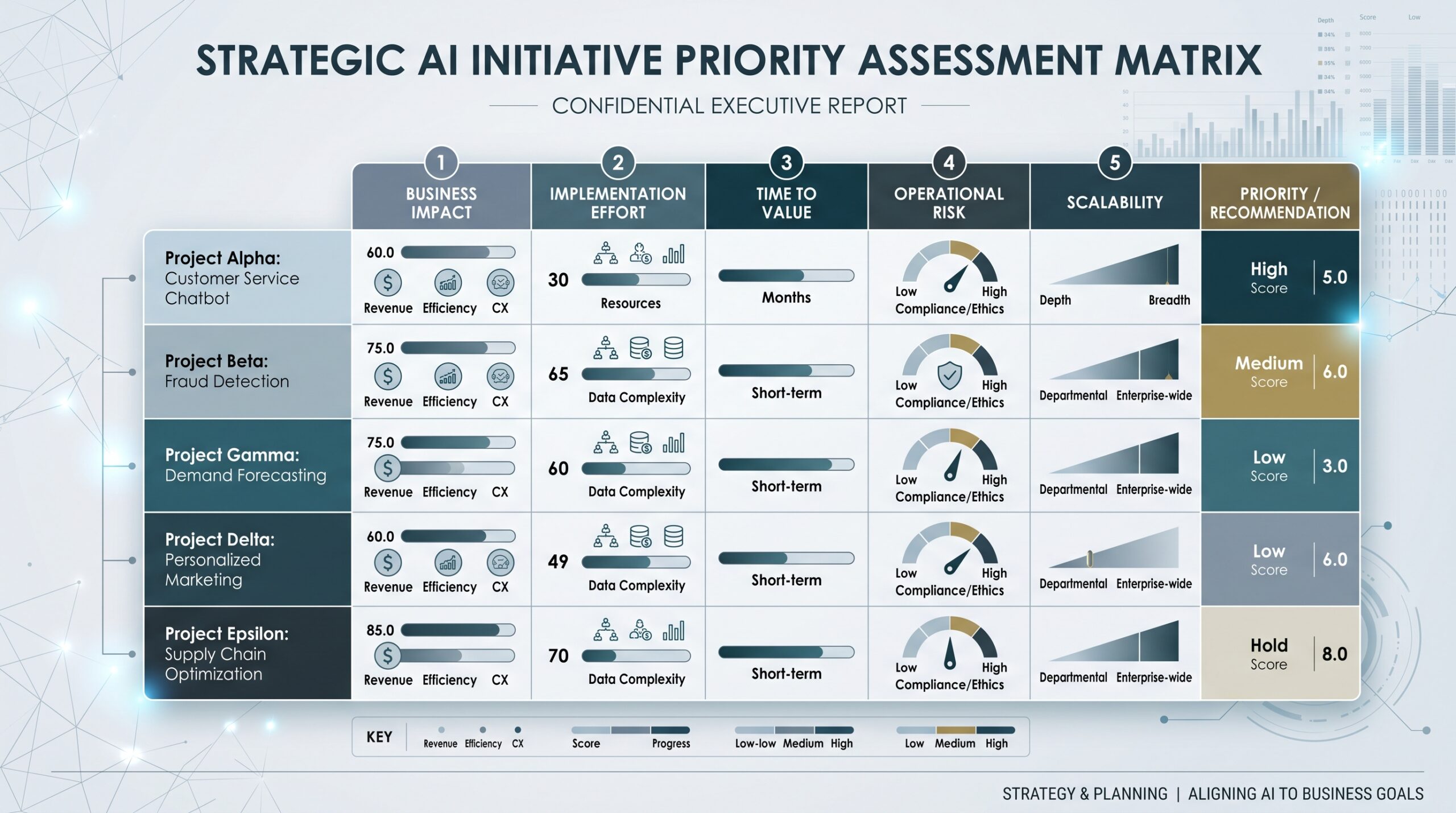
Decision Matrix: Ranking AI proposals by impact, effort, speed, risk, and scalability improves budget discipline.
SOURCE: EXPERT PRODUCT LAB — ENTERPRISE AI ECONOMICS 2026
This approach does not eliminate judgment, but it improves discipline. It forces teams to compare initiatives by business logic instead of enthusiasm, vendor influence, or internal hype.
7. Common Budget Mistakes in Enterprise AI
The most common mistake is buying tools before defining the workflow they are supposed to improve. The second is spending too early on architecture, integration, or platform layers before the first use case has proven its value. A third mistake is measuring AI activity through adoption metrics alone, instead of tying budget decisions to revenue, cost, risk, or throughput outcomes.
Another recurring issue is underestimating change management. Even well-designed AI systems fail when the people who should use them are not trained, not incentivized, or not included in the workflow redesign. Budget planning that ignores adoption planning usually creates technical assets without operational lift.
8. How to Build a Smarter Funding Sequence
A strong enterprise sequence is usually straightforward:
- Select the first use case with the clearest ROI.
- Confirm data access and operational ownership.
- Add governance, security, and policy controls.
- Choose tools that fit the current stack instead of creating unnecessary complexity.
- Train the teams who will use the system in daily operations.
- Measure results and reallocate budget based on what is actually working.
This sequence keeps spending anchored to business outcomes while still building the foundation required for scale. It also gives finance and executive stakeholders a cleaner narrative for why each layer of spend exists.
The Long-Term Value of Better AI Allocation
The most effective AI budgets in 2026 are not defined by how many tools an enterprise buys. They are defined by how deliberately the organization funds value creation, readiness, governance, and scale. Better sequencing creates faster wins, reduces waste, and improves the credibility of AI investment across the company.

Execution Readiness: Clearer AI budget sequencing improves governance, adoption, and the credibility of enterprise investment decisions.
SOURCE: EXPERT PRODUCT LAB — ENTERPRISE AI ECONOMICS 2026
To connect first-wave AI use cases with a broader cost architecture,
see
Enterprise AI Budgeting in 2026: 4 Traps That Destroy ROI (And How to Avoid Them)
for a more complete framework on budgeting, governance, and scenario planning.