AI & CRM Infrastructure • 2026
Affiliate Disclosure: This site contains affiliate links for which Expert Product Lab may be compensated if you make a purchase. Our technical evaluations are based on real-world scalability, database integrity, and true operational ROI.
Agentic AI CRM for Small Business: What Actually Matters in 2026
The marketing noise surrounding Artificial Intelligence has reached a fever pitch. Every major CRM platform has spent the last year rebranding its standard automation features as “revolutionary AI.” But beneath the marketing buzz, a genuine architectural shift has taken place in 2026: the transition from assistive technologies to Agentic AI.
For growing companies, this distinction is the difference between an expensive digital toy and a compounding revenue multiplier. Small businesses cannot afford to burn runway on unproven technology stacks or complex implementation cycles. This audit cuts through the corporate hype to deliver a pragmatic, CTO-grade evaluation of agentic workflows inside small business CRMs, focusing entirely on what drives pipeline velocity and operational efficiency today.
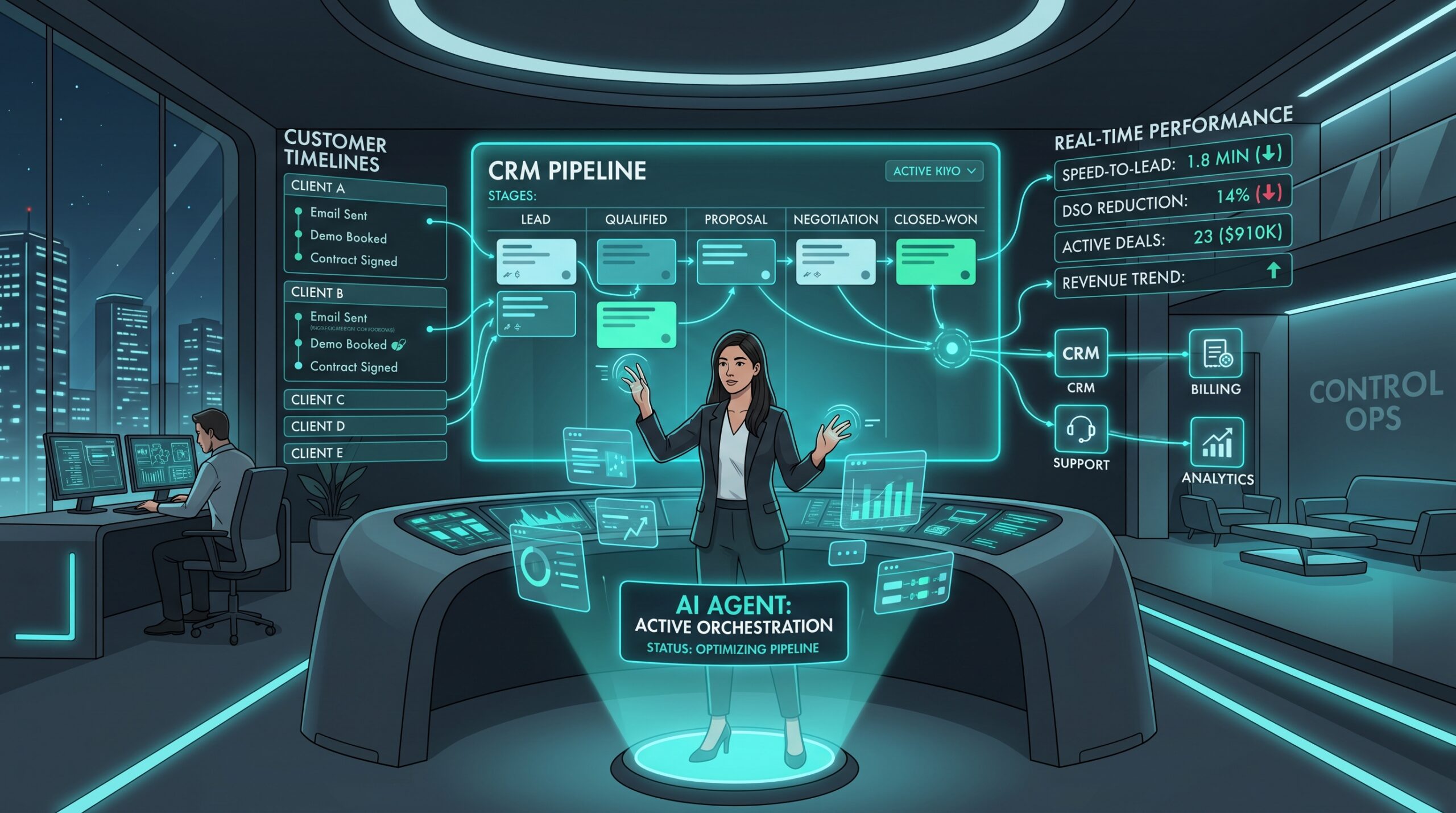
The 2026 Agentic Architecture: How autonomous AI agents interface directly with core CRM databases (HubSpot, Pipedrive, Zoho) to execute revenue workflows without human intervention.
SOURCE: EXPERT PRODUCT LAB ANALYSIS — SAAS INTELLIGENCE DIVISION
Table of Contents:
- 1. Defining Agentic AI in CRM (Without the Hype)
- 2. Where Agentic AI Delivers Proven SMB ROI Today
- 3. The Noise: What Small Businesses Should Explicitly Ignore
- 3.1 Risk Controls for Agentic AI in SMB CRMs
- 3.2 Why Small Businesses Have the Agentic Advantage
- 4. The 2026 Buyer’s Decision Checklist
- 5. The 30-Day Implementation Playbook
- 6. Frequently Asked Questions
1. Defining Agentic AI in CRM (Without the Hype)
To make an intelligent software acquisition decision, small business leaders must understand the structural line separating traditional generative AI from true agentic systems.
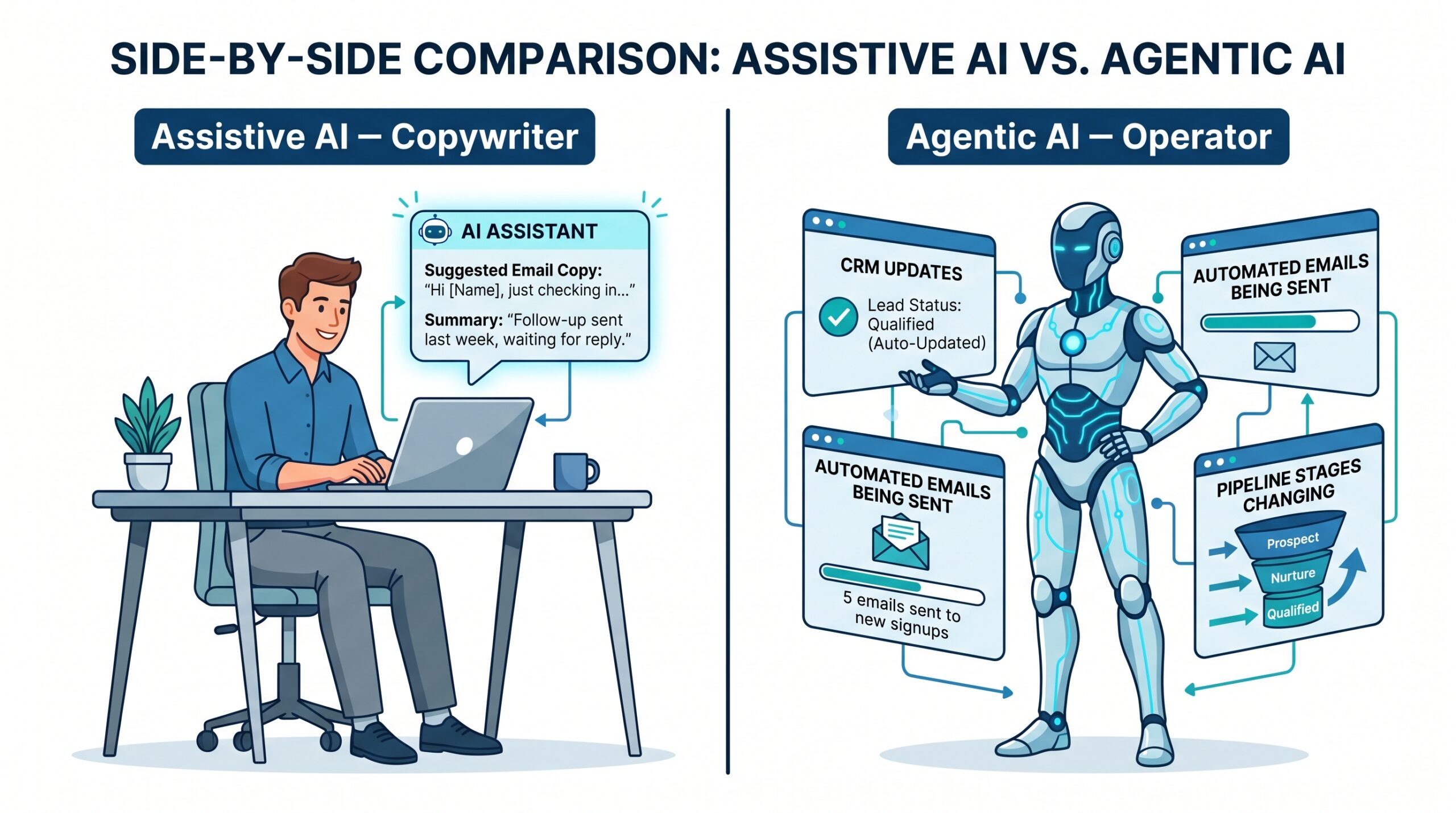
- Assistive AI (The Copywriter): This is the baseline technology embedded in most CRMs since 2024. Assistive AI is passive. It waits for a human prompt to generate an email template, summarize a lengthy meeting transcript, or rephrase a support ticket response. The human remains the operational bottleneck, executing every transition, clicking “send,” and manually changing fields in the database.
- Agentic AI (The Operator): Agentic systems possess autonomous agency. Once granted operational guardrails, an AI agent monitors incoming data streams, reasons through a multi-step objective, plans its own course of action, and executes tasks directly inside and outside the CRM environment. It doesn’t ask you to write an email; it evaluates a newly created inbound lead, cross-references internal data tables, conducts external background enrichment, scores the deal, drafts and deploys a hyper-personalized response sequence, and updates the pipeline stage—completely unprompted.
2. Where Agentic AI Delivers Proven SMB ROI Today
Small businesses do not need theoretical capabilities; they need repeatable workflows that save hours or capture leaked revenue. In 2026, four clear use cases have emerged with clear, quantifiable ROI data for teams managing 1 to 50 people.
Try the Agentic AI ROI Calculator
If you want a lightweight way to test this thinking before building a full spreadsheet, our
Agentic AI ROI calculator
Turns team size, repetitive workload and tooling cost into automatable hours, monthly value and a clear ROI snapshot you can share with stakeholders.
A. Agentic AI CRM for Small Business Inbound Lead Qualification & Immediate Follow-up
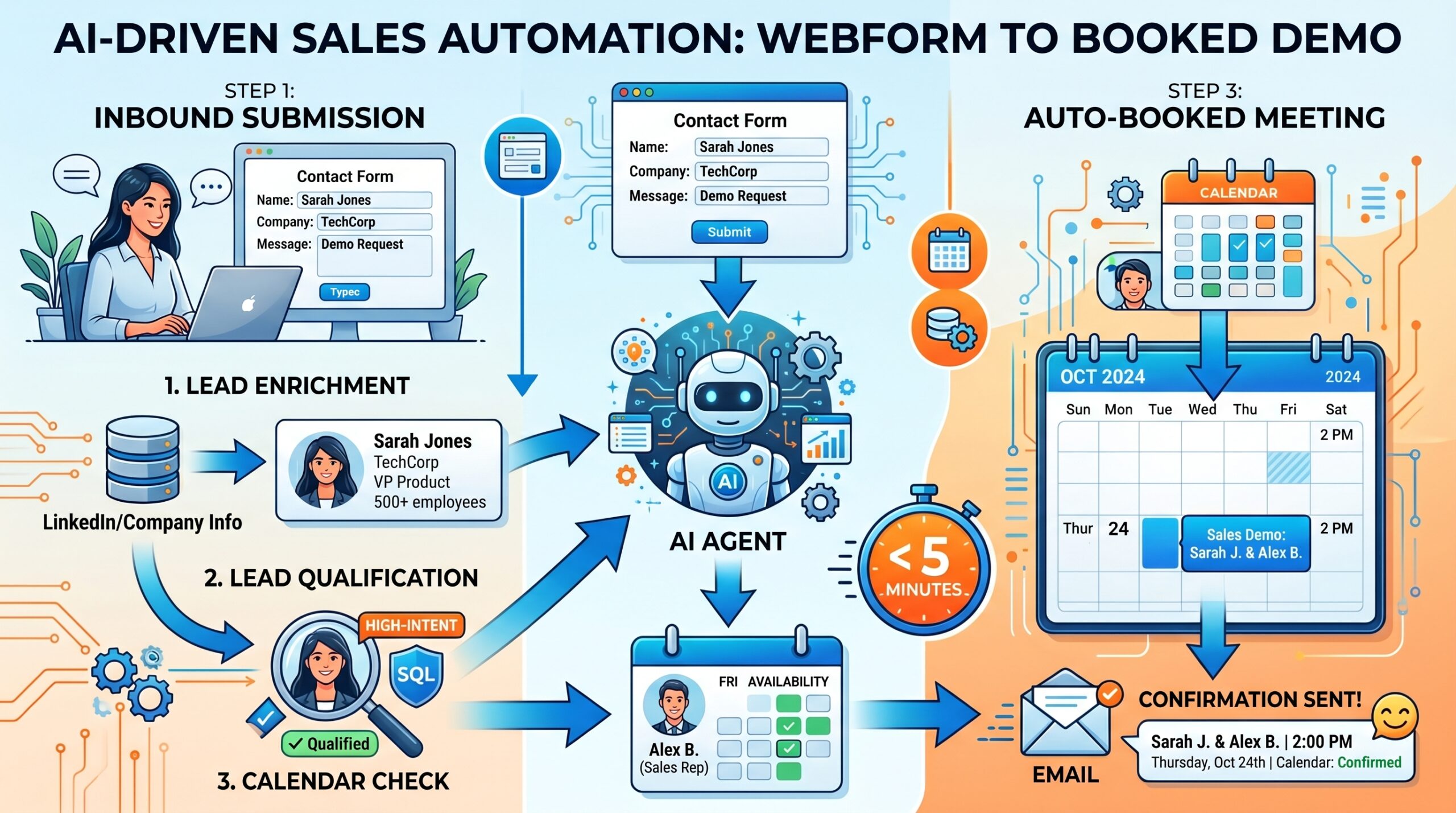
The financial impact of speed-to-lead is brutal: responding to an inbound inquiry within 5 minutes yields a 21x higher qualification rate than waiting 30 minutes. Humans cannot maintain this standard 24/7/365. Agentic AI solves this entirely. When a form is submitted, the agent instantly enriches the contact info via clear data parameters, checks availability in your sales reps’ calendars, starts a contextual conversation via email or SMS to verify budget and timeline, and secures a booking—all while the lead is hot.
- Choose one form or channel (e.g., “Contact Sales” webform) as the trigger source.
- Define qualification rules in plain language: industry, deal size minimum, geography, buying role.
- Create 3–4 approved response templates the agent can reuse without edits.
- Set escalation logic: when the agent must hand off to a human (e.g., VIP domains, large deal size).
B. Invoice Follow-ups & Gentle Collections Orchestration
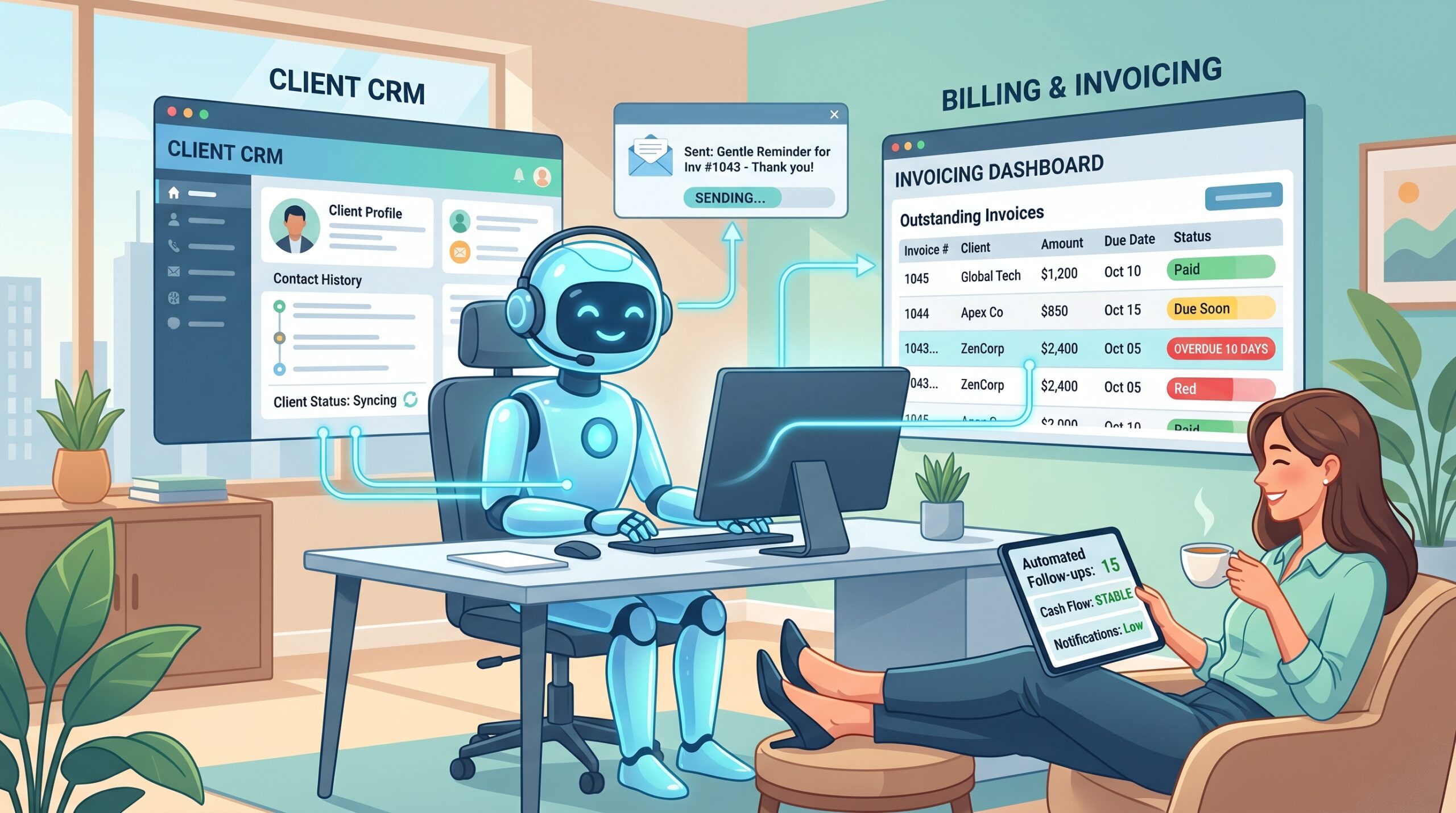
Accounts receivable drag is a primary driver of small business cash flow friction. Manually auditing who owes money and sending awkward reminders drains emotional energy and administrative hours. AI agents handle this delicately but persistently. By syncing directly with your billing platform and CRM, agents track due dates, analyze the client’s past payment behavior, and deploy tailored follow-up sequences that look and feel entirely human, escalating the priority tier only when hard deadlines are missed.
- Connect your CRM to your invoicing or billing system so due dates and statuses stay in sync.
- Segment customers by risk (on-time, occasionally late, chronically late) and define tone levels.
- Pre-approve reminder cadences for Day -3, Day 0, Day +7, and Day +14 after due date.
- Ensure any “final reminder” emails are always reviewed by finance or leadership.
C. CRM Database Hygiene & Real-time Maintenance
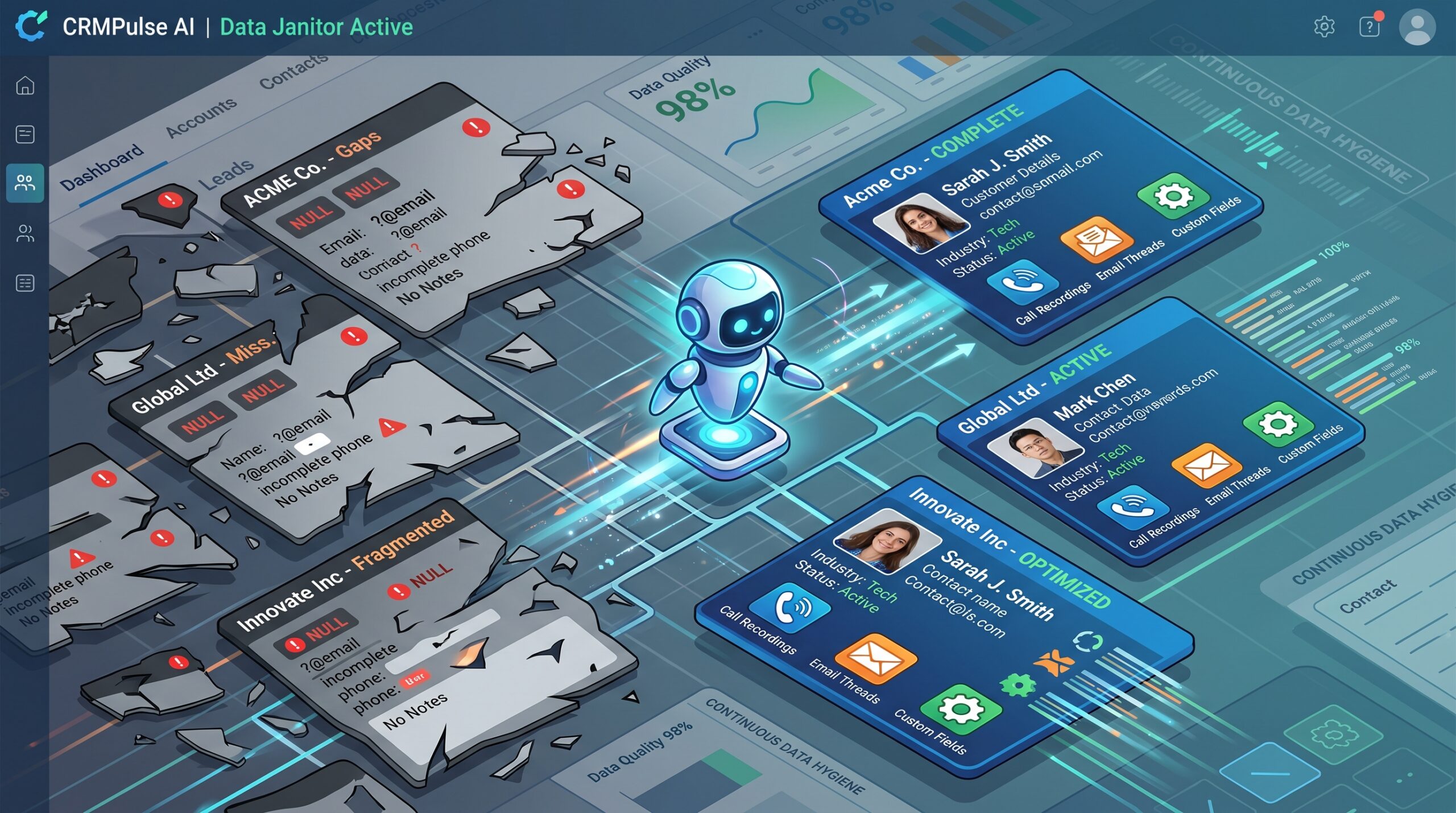
The single greatest point of failure for any small business CRM deployment is bad data compliance. Sales reps notoriously hate filling out custom properties, resulting in fragmented pipelines and useless analytics. Agentic AI acts as an invisible database administrator. It monitors call recordings and email threads, automatically extracts contract end dates, competitive mentions, or deal amounts, and fills in missing records behind the scenes, ensuring your database remains clean and accurate without manual data entry.
- List 5–10 properties that must always be accurate (e.g., lifecycle stage, deal amount, renewal date).
- Grant the agent write-access only to those properties and to no destructive fields.
- Enable logs so every change shows “updated by AI agent” with timestamp and source.
- Run a weekly report of AI-updated fields to spot patterns or misclassifications early.
D. Level-1 Support Triaging & CRM-Integrated Scheduling
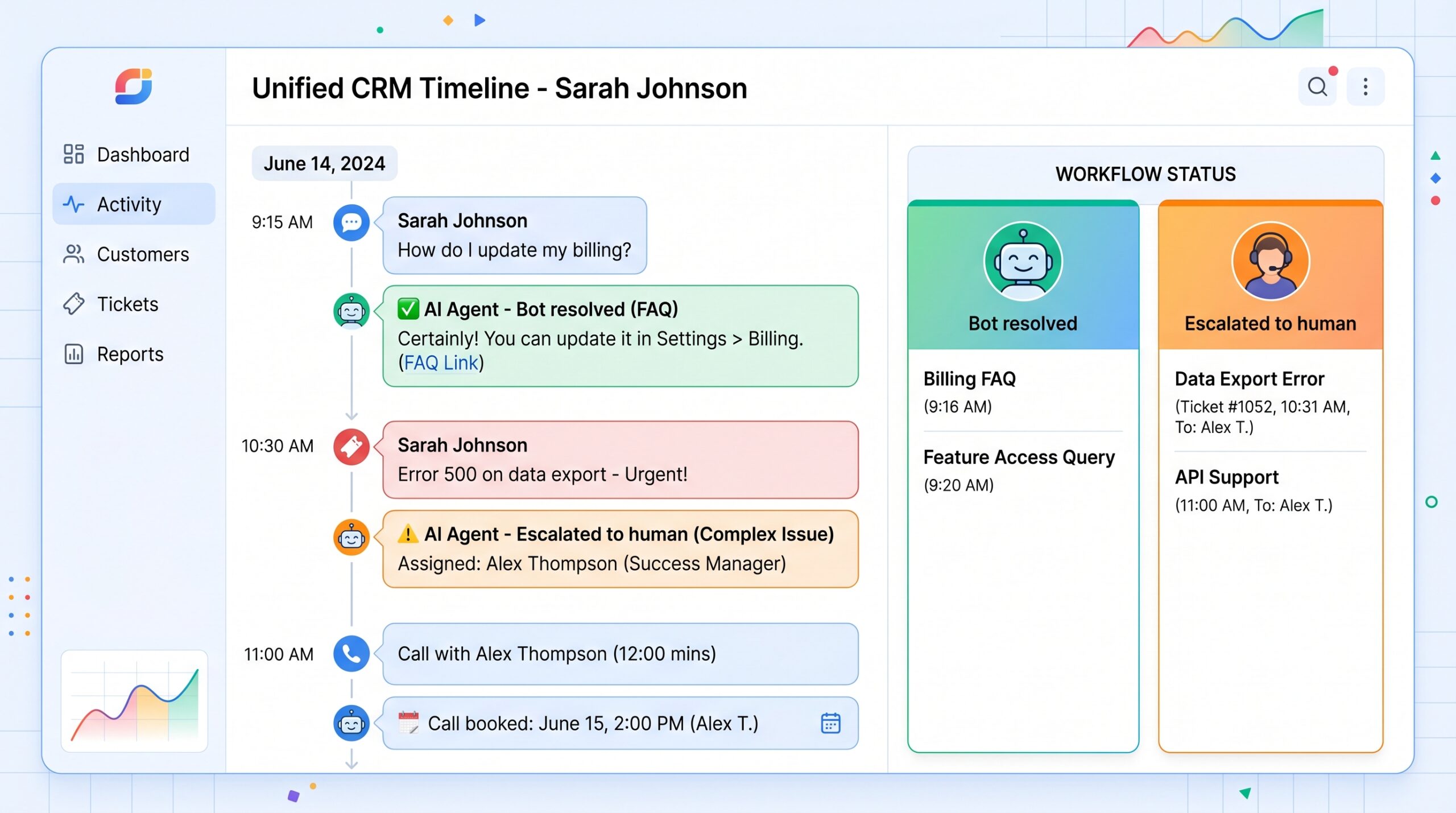
Instead of disconnected live chat widgets that create detached data siloes, modern agents handle customer triage natively inside the CRM timeline. They resolve repetitive technical questions, access knowledge bases, and instantly route complex accounts to dedicated customer success managers, scheduling escalations directly into internal team calendars without losing contextual deal history.
- Tag the 20–30 most common support questions and link them to approved knowledge base answers.
- Define what “handoff” means: create ticket, book call, or notify a channel like #cs-escalations.
- Limit live-agent autonomy initially to low-risk FAQ and account lookups.
- Require human review for billing disputes, cancellations, and high-value accounts.
| Operational Bottleneck | Traditional SMB Solution | 2026 Agentic AI Solution | Quantifiable ROI Metric |
|---|---|---|---|
| Speed-to-Lead Delay | Manual reply (1–4 hours) | Instant Autonomous Qualification | +41% Conversion Velocity |
| Accounts Receivable Drag | Manual tracking & emails | Proactive Invoice Orchestration | -12 Days Sales Outstanding (DSO) |
| Broken CRM Hygiene | Forced manual data entry | Background Log Extraction | 5–8 Hours Saved/Rep/Week |
| Level-1 Support Overhead | Manual sorting & ticketing | CRM-Integrated Triage | -60% Ticket Volume Deflection |
3. The Noise: What Small Businesses Should Explicitly Ignore
As a founder or operator, protecting your focus is just as important as choosing your tooling. The enterprise landscape is full of over-engineered, high-margin software features designed for Fortune 500 corporations that provide absolute zero value to an early-stage or mid-market company. Filter out the following elements immediately:
- “Sci-Fi” Conversational Interfaces: Ignore platforms that force your team to communicate with their CRM exclusively via flashy voice commands or chat prompts. Standard tables, clean pipelines, and kanban cards remain the most efficient human interface design for closing deals. Voice and text are excellent for the AI agent backend; they are a slow bottleneck for human data review.
- The Myth of “Replacing Your Sales Team”: Any platform promising to replace your entire sales staff with autonomous digital employees is misrepresenting the reality of corporate procurement in 2026. Trust is a human currency. Agentic AI is designed to automate administrative friction, remove routine tasks, and handle data logistics so your high-value sales reps can spend 100% of their day having real, unhurried conversations with qualified buyers. It scales headcount efficiency; it doesn’t eliminate the human element.
3.1 Risk Controls for Agentic AI in SMB CRMs
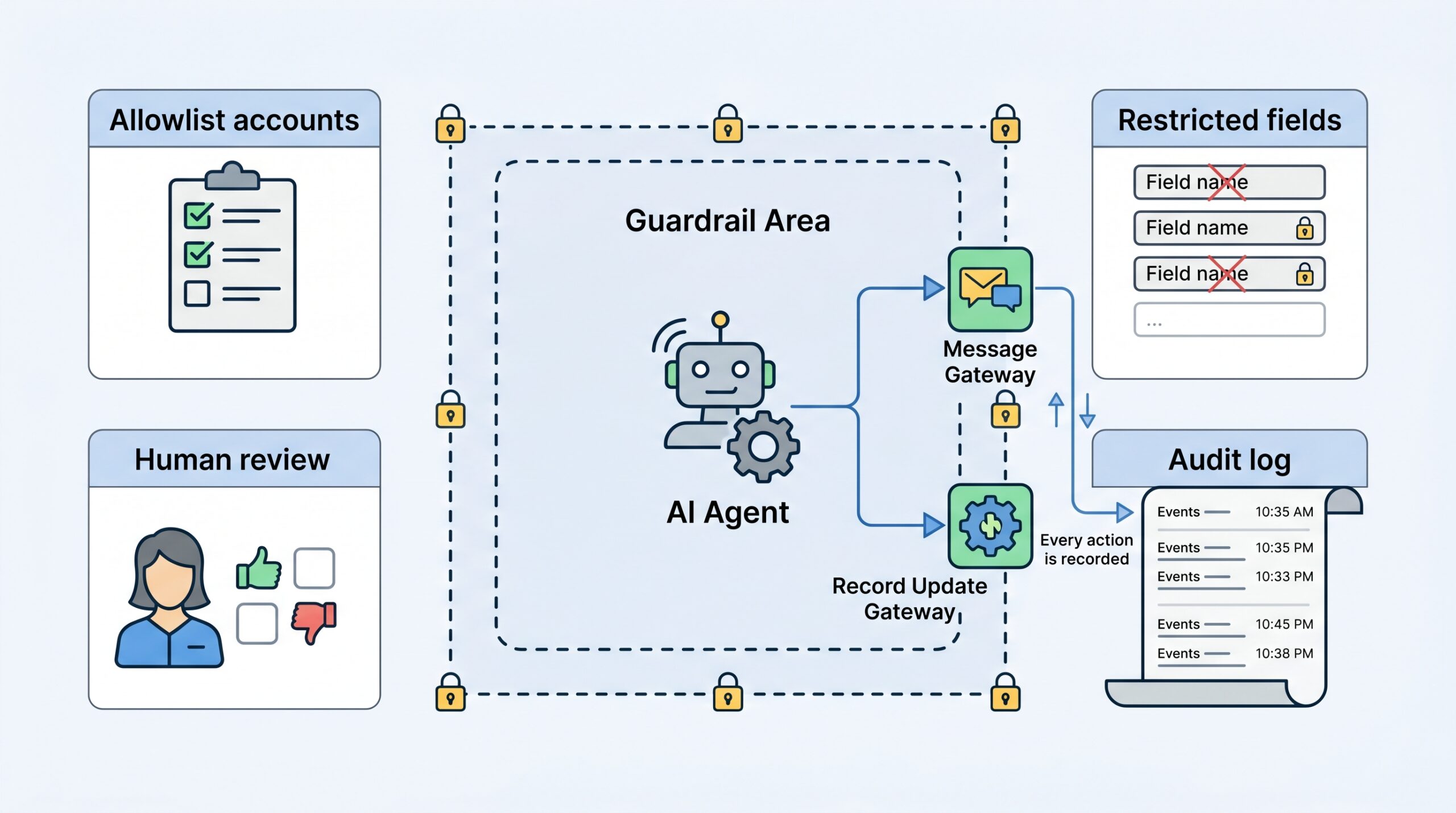
Autonomous systems touching customer data always introduce risk. Small businesses cannot afford brand-damaging mistakes, so risk controls must be designed into the deployment from day one.
- Misrouted or Off-Brand Messages: Protect key accounts with “do-not-touch” lists and domain-based allowlists. Route all outbound messages for strategic or high-ACV customers through human approval before sending.
- Pipeline Corruption: Restrict the agent’s write-access to a narrow set of fields and stages. Back up critical CRM views weekly so any misclassification can be rolled back without guesswork.
- Over-Automation Fatigue: Ensure every automated sequence includes clear human escape hatches: visible contact details, easy scheduling links, and fast ways to escalate to a real person.
3.2 Why Small Businesses Have the Agentic Advantage
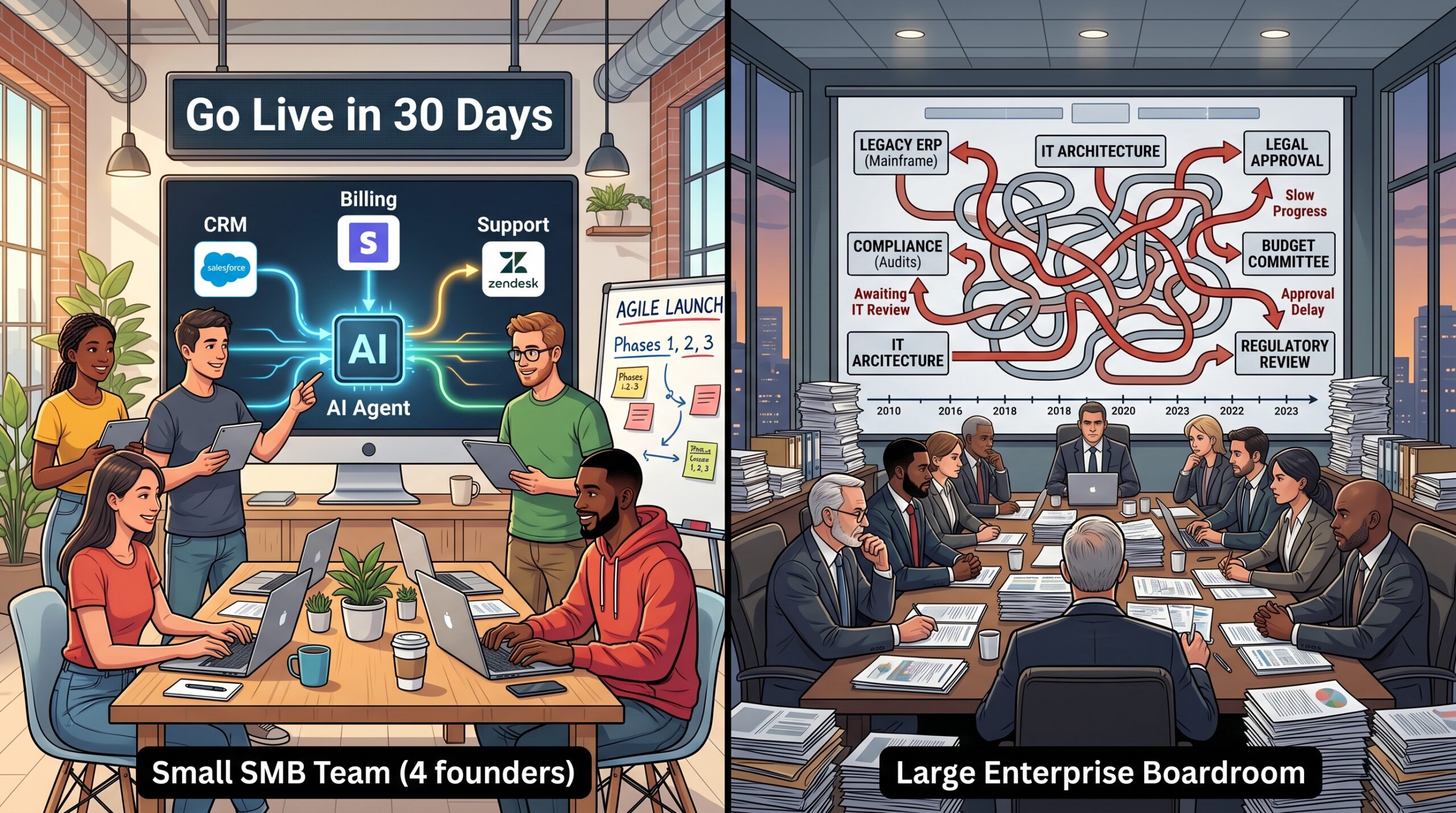
Enterprise vendors dominate the headlines, but small businesses are structurally better positioned to capture agentic AI gains first. They have fewer legacy systems, shorter decision cycles, and far less political friction between sales, marketing, and support.
While large organizations debate committees, a founder-led team can map a single workflow, plug an agent into their existing CRM, and iterate live over the course of one quarter. The result is the same technology surface area as a global brand—without the organizational drag.